
Gen-Z’s kurta-with-denim habit is rewiring India’s ethnic wear retail
8 April 2026, Mumbai
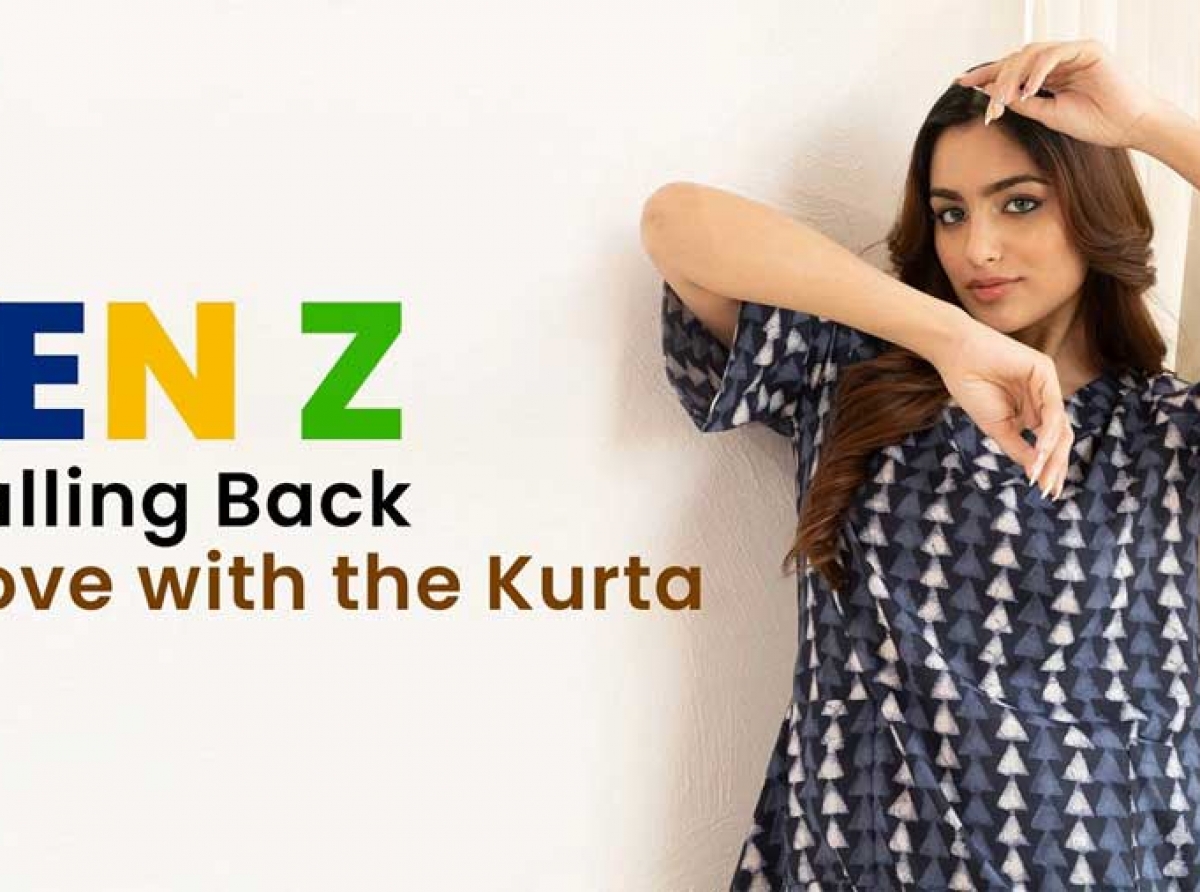
India’s ethnic wear market is entering a decisive new phase. Once powered almost entirely by wedding calendars, festive sales and family-led purchasing, the category is now being rewired by Gen-Z’s daily wardrobe choices. What was once occasion-bound is becoming a high-frequency fashion habit. The real disruption is not the kurta itself, but the context in which it is now being worn.
At an estimated $21 billion in 2024 and a projected increase to $30 billion by 2030, Indian ethnic wear is no longer a ceremonial market. It is increasingly behaving a fast-moving lifestyle category, borrowing the repeat purchase economics of western casualwear while retaining the emotional and craft value of traditional textiles. The sharpest change is visible in urban wardrobes, where kurtas are now paired with denim, cargos, sneakers and corsetry-inspired layering. For Gen Z, ethnic wear is no longer an inherited code of dressing. It has become a flexible medium of self-definition. That shift is forcing brands to rethink merchandising, pricing architecture and content-led distribution at speed.
The rise of everyday ethnic
The most interesting break in the market is frequency. Festive and occasion wear traditionally delivered high-ticket purchases but low annual volume. Consumers bought two or three times a year, often spending anywhere between Rs 5,000 and Rs 25,000 per purchase. The business was predictable, seasonal and deeply tied to cultural events. The emerging everyday ethnic segment has inverted that model.
Table: Apparel buying frequency
|
Metric |
Festive/Occasion wear |
Everyday/Casual ethnic |
|
Purchase Frequency |
2-3 times per year |
1-2 times per month |
|
Average Ticket Size |
Rs 5,000-25,000 |
Rs 800-2,500 |
|
Primary Driver |
Tradition / Events |
Identity / Comfort |
|
Top Influencer |
Celebrity / Family |
Peer Content / Personal Taste |
The table clearly shows the new economics: purchase frequency has increased from a few annual buys to one or two purchases every month, even as average ticket sizes have fallen to the Rs 800-2,500 range. For brands, this is not margin dilution, it is revenue smoothing. Lower average order values are being offset by improved repeat rates and a more stable monthly sales cadence.
This shift matters because it changes the entire supply chain logic. Instead of designing for singular big day purchases, brands now need faster drops, tighter replenishment cycles and a silhouette pipeline that mirrors western wear’s trend responsiveness. The fast selling SKUs are no longer heavy festive sets, but cropped kurtis, halterneck tunics, kurta dresses and fusion separates that solve for office, college, cafés and weekend social settings.
The consumer driver has changed just as much. Traditional occasion wear was driven by family expectations, ritual and celebrity inspiration. The casual ethnic table makes clear that the new trigger is identity and comfort. This is a much more powerful long-term demand engine because it converts ethnic wear from event-led necessity into wardrobe habit.
The under-Rs 2,000 sweet spot
The pricing layer is where the business opportunity becomes most visible. The sub-Rs 2,000 band has emerged as the market’s most important category because it sits at the intersection of impulse affordability and fashion experimentation. Gen-Z consumers are willing to test unconventional silhouettes like corset kurtis, asymmetric hems, ethnic shrugs, deep-back kurtas when the financial risk is low.
For brands, this price band encourages trial and shortens the decision cycle. Unlike premium occasion wear, which requires emotional justification and delayed purchase intent, casual ethnic buys are often triggered by social content, peer styling inspiration or creator-led outfit hacks. This is why fusion-first silhouettes are scaling faster than conventional kurta sets. They fit seamlessly into existing wardrobes, lowering styling friction. A cropped block-print kurti worn with wide-leg jeans does not require a new fashion behavior. It upgrades an existing one. That distinction is commercially critical. The winners in this segment are not selling ethnic. They are selling compatibility with modern wardrobes.
Creator-led distribution replaces campaign-led branding
The second major shift is distribution economics. The argument that 76 per cent of young consumers discover brands through reels and social-first content underlines a deeper truth: discovery has moved from search-led intent to feed-led inspiration. The storefront is now algorithmic. This is why polished campaign films are steadily losing efficiency against founder-led storytelling, sample-room footage and behind-the-scenes production narratives. Transparency itself has become a conversion tool.
When consumers watch failed stitching samples, dye tests, fitting corrections and founders packing shipments, they are not just consuming content. They are participating in brand formation. This creates emotional equity that paid media alone cannot replicate.
For emerging labels, this lowers the cost of trust-building. Instead of burning capital on large-format celebrity endorsements, they can convert visibility into loyalty through proximity. The founder becomes both storyteller and retention engine. In business terms, this reduces CAC while improving repeat purchase probability, a powerful equation in a category now dependent on monthly buying cycles.
Scaling the uncodified habit
The most compelling insight from the case study is behavioral change. The habit of wearing kurtas with jeans was already widespread across urban India, but it existed as an uncaptured consumer behavior rather than a formal category. By identifying this scattered habit and turning it into the central design and marketing thesis, the brand effectively created a demand language around an existing wardrobe instinct.
The reported scale-up from zero to Rs 5 crore in eight months without external funding is significant not just as a growth story, but as proof of model efficiency. The 200 per cent rise in returning customers suggests the product was not merely trend-led; it solved a recurring lifestyle use case. This is where mid-sized and emerging players now hold an advantage over legacy retailers. They can move faster on micro-behaviors before larger players build internal consensus, redesign sourcing pipelines and rework store visual merchandising. In today’s fashion market, speed to cultural codification is becoming a stronger moat than scale.
What each tier must do now
For small brands, the path is clear: build community before brand architecture. The opportunity lies in sharp silhouettes, founder visibility and rapid iteration on fusion formats that larger players may still view as niche.
Mid-sized players need to treat fusion ethnic as a core growth vertical, not an experimental edit. D2C data loops can help optimize repeat rates, pricing elasticity and personalization, particularly in modern silhouettes where size confidence remains a barrier.
For large retailers, the imperative is structural. Inventory systems built around festive cycles must be redesigned for higher-frequency casual demand. This includes shorter design calendars, omnichannel discovery and tech-enabled fit tools for non-traditional silhouettes. The offline-online divide is especially critical here. Casual ethnic is a digital-native category, and brands that fail to replicate social discovery in stores risk losing relevance among younger cohorts.
The new growth engine
The broader women’s apparel market, already valued above $53 billion, gives this shift even greater significance. Casual ethnic sits in the middle of three durable growth drivers: identity-led dressing, affordable experimentation and digital-first discovery. What Gen-Z has effectively done is remove ethnic wear from the confines of tradition and reposition it inside the logic of everyday fashion.
That changes everything, from SKU planning and price ladders to content strategy and repeat revenue models. The kurta is no longer a festive garment waiting for a date on the calendar. It is becoming India’s newest casual uniform, and in that transition lies the next major profit pool for fashion retail.








 Get in Touch!
