
Beyond the Product: India’s affluent are paying more for space than style
23 April 2026, Mumbai
In a market driven by visible wealth gold, logos, and occasion dressing, the new currency is far less tangible but far more powerful: space. As the country’s apparel sector races toward a projected $115.7 billion valuation in 2026, a parallel shift is redefining premium consumption. Increasingly, what affluent consumers are buying is not just fashion, but insulation from the chaos that surrounds it. This shift marks the emergence of ‘distance from density’ as a distinct luxury asset class one that cuts across fashion, retail real estate, and service design. In a country of 1.4 billion people, scarcity of space has become the ultimate differentiator.
Luxury as an escape from urban intensity
Unlike Western luxury markets, where consumption often reflects legacy and cultural continuity, India’s premium demand is being shaped by environmental stress. High-density urban living, sensory overload, and time scarcity are pushing affluent consumers toward experiences that offer relief rather than spectacle. This is playing out clearly in fashion, where quiet luxury, marked by craftsmanship, subtlety, and fabric excellence is outperforming logo-driven consumption. The focus has moved from visibility to discretion, from statement-making to sanctuary-building.
Market data reinforces this change. While the broader apparel industry continues to grow riding on mass consumption and digital discovery, the luxury segments are being driven by factors like personal identity and curated access. The luxury fashion market, valued at $9.85 billion, is still anchored in rising affluence and status signalling. However, within that, luxury apparel at $7.77 billion is increasingly driven by personal expression rather than overt branding. Meanwhile, the much larger online fashion segment, at $56.21 billion, reflects scale through AI-led discovery and mobile commerce. At the top of the pyramid, however, the total apparel market’s $115.7 billion valuation masks a critical insight: the fastest value creation is happening not through volume, but through controlled, low-density experiences.
Retail real estate becomes the new luxury gatekeeper
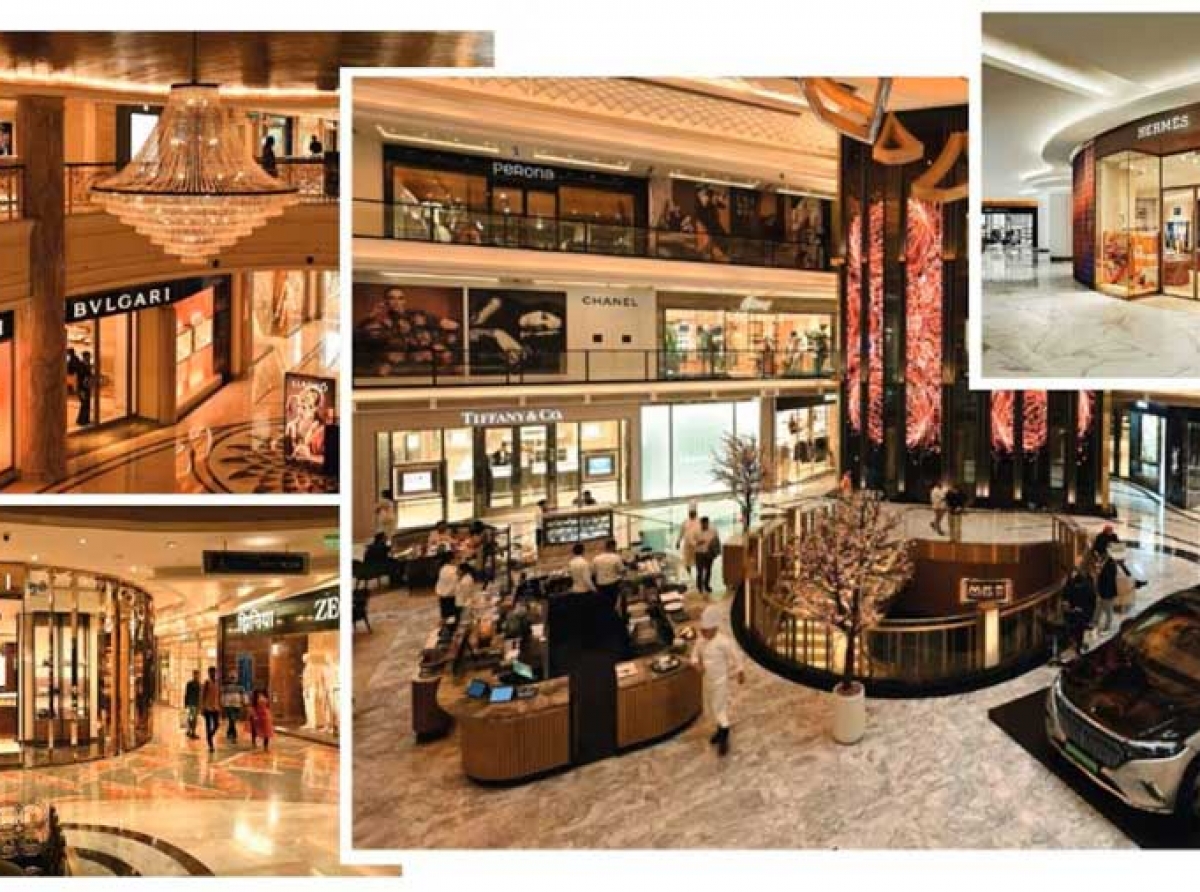
The implications of this shift are most visible in retail infrastructure. Premium shopping destinations are no longer designed for throughput; they are engineered for exclusion. For example, Mumbai’s Jio World Plaza and emerging bespoke fashion districts in Delhi are redefining the purpose of retail spaces. These spaces function less as malls and more as curated ecosystems. Entry, movement, and interaction are carefully controlled, turning access itself into a premium offering. The gate is no longer a barrier, it is the product.
Brands are responding by investing in private client suites, appointment-only floors, and concierge-led shopping journeys. In this model, the garment is almost secondary; the primary value lies in the absence of crowds, queues, and noise. The ability to shop in silence has become a monetisable advantage.
The economics of exclusivity
The commercial logic behind this transformation is compelling. India’s affluent population is expected to grow from 60 million to 100 million by 2027, creating a demand pool for premium, low-density experiences. This demand is already translating into measurable pricing power. High-net-worth consumers are willing to pay a 15-25 per cent premium for environments that guarantee personal space and controlled interaction. The luxury purchase, therefore, is no longer just a product transaction, it is an experiential contract.
Data on luxury spending indicators highlights this shift. With the HNI base projected to hit 100 million, the willingness to pay premiums for exclusivity is reshaping pricing strategies across categories. North India, accounting for a 30 per cent share of demand, is emerging as a major growth hub, while women who make up 52 per cent of the luxury apparel segment, continue to dominate consumption patterns.
The shift to high-touch retail
The strategy is already visible in how global and domestic players are entering and expanding in India. The partnership between Reliance Retail and Saks Fifth Avenue, along with the introduction of brands like Balenciaga, reflects a deliberate focus on controlled retail environments rather than mass visibility. These spaces are designed for intimacy, low footfall, high engagement, and personalised service. The result has been a reported 20 per cent increase in private viewing sessions across Tier-1 cities, indicating that consumers are actively seeking out these insulated experiences.
Domestic players are equally aligned with this trend. House of Anita Dongre has successfully positioned its retail environments as cultural retreats, blending heritage storytelling with slow retail formats that prioritise experience over transaction speed.
From visibility to relief
For brands, the shift from being seen to providing relief is a fundamental reset. Traditional metrics such as footfall and conversion rates are giving way to new KPIs: dwell time, appointment bookings, and repeat private client interactions. However, this change is not without its challenges. The biggest constraint remains the infrastructure-aspiration gap. Creating low-density, high-touch retail environments requires significant capital investment and access to premium real estate both of which are limited in India’s urban centres.
Yet, for those who can bridge this gap, the rewards are substantial. Integrating space into the value proposition is enabling brands to unlock higher margins, stronger customer loyalty, and a differentiated positioning in an increasingly crowded market.
Silence as a scalable asset
The Indian luxury apparel market, currently valued at $7.77 billion, is projected to reach $10.9 billion by 2034, pushed up by growing urban elite and the continued rise of quiet luxury. Women-led consumption and regional growth in North India will remain major demand drivers, but the defining factor will be how effectively brands can scale exclusivity without diluting it. In a market where scarcity has traditionally been associated with materials and craftsmanship, the new scarcity is spatial. And in that equation, silence is emerging not just as a luxury but as one of the most profitable assets on the balance sheet.










 Get in Touch!
