
Organized saree retailers chase Rs 80,000 - crore market in smaller cities
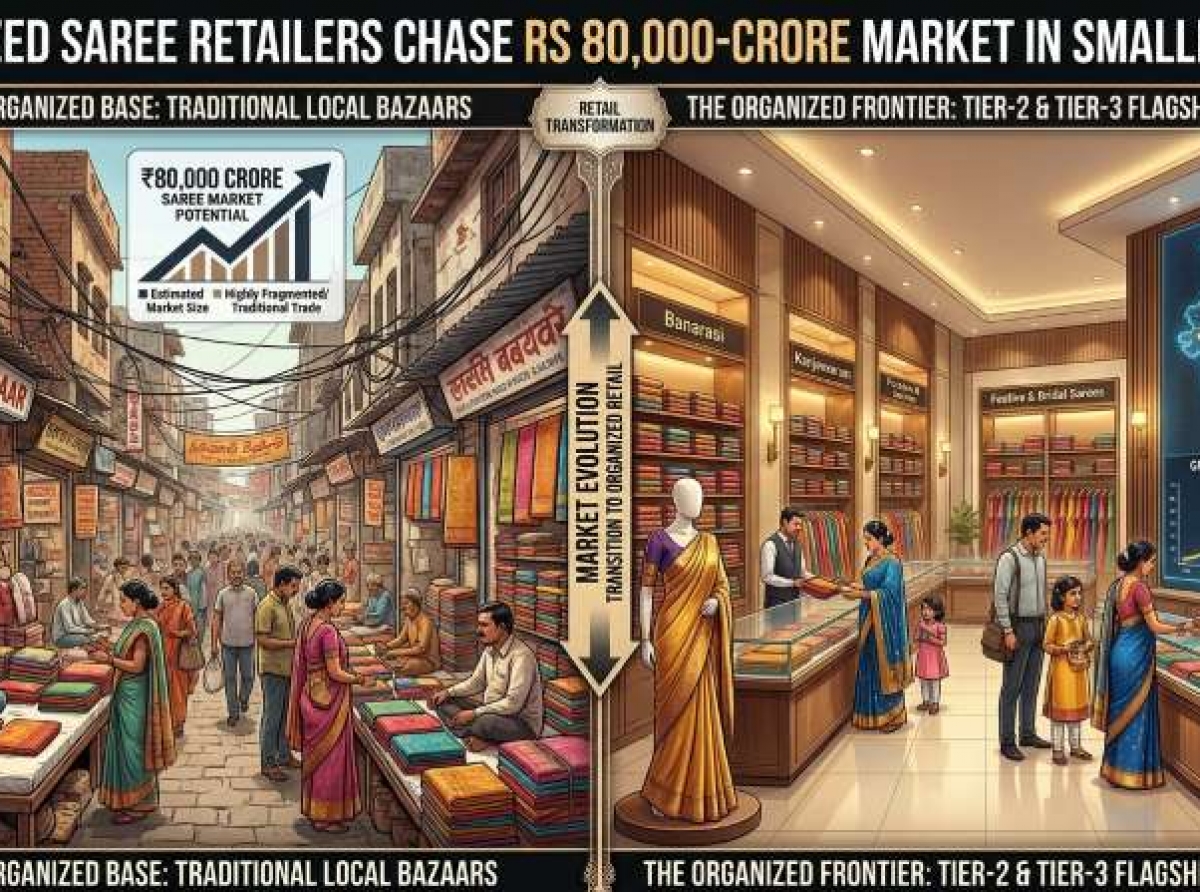
Apparel chains are redirecting capital toward Tier II and Tier III towns as regional spending outstrips metropolitan growth. Industry data shows, Tier III fashion spending rose by 15.6 per cent during Diwali 2026- more than double the 6.9 per cent recorded in metros - with East India expanding at 13.9 per cent. At the Kolkata Retail Summit 2026 on November 26, executives outlined how organised players are capturing India’s Rs 80,000-crore saree category, which remains over 90 per cent unorganised. The saree isn't losing young customers; it is being reinvented for them, says Chetan Thakwani, CEO, Legacy of Bhojraj. Younger women are choosing it for work, for festivals and for the moments they share online, but they want lighter fabrics, easier drapes and designs that keep pace with trends.
Scaling supply chains without margin erosion
Rapid trend cycles and high inventory fragmentation complicate regional expansion. To preserve healthy margins while shortening replenishment timelines, Kolkata-based Indian Silk House Agencies links a 35,000-sq-ft central warehouse to over 60 weaving clusters and 15,000 artisans. Using a franchise-owned, company-operated model alongside store-led video commerce, the retailer is opening outlets every seven to ten days across underserved markets. Such supply-chain discipline enables regional brands to formalize fragmented handloom trade while defending profitability.
Heritage craft meets omnichannel acale
Founded from a single Kolkata store in 1971, Indian Silk House Agencies retails handwoven silk and cotton sarees across eastern and national markets. Targeting 500 stores by 2030 and ₹1,000 crore in revenue, the firm maintains 15 to 20 per cent EBITDA margins while entering the UK and US diaspora markets.









 Get in Touch!

