All Stories

TMRW enters high-velocity expansion with $500 million run-rate

Digital-first ‘House of Brands’ venture under Aditya Birla Fashion and Retail (ABFRL), TMRW is entering a high-velocity expansion phase with an annualized revenue run-rate approaching the $500 million mark. This fiscal progression follows a strategic Rs 437 crore ($50 million) investment from ServiceNow Ventures in late 2025, which has been deployed to integrate agentic AI and automated workflows across TMRW’s multi-brand ecosystem. By leveraging predictive analytics for demand forecasting and inventory replenishment, the Group is effectively neutralizing the operational inefficiencies that often hinder smaller, fragmented D2C labels.

Portfolio optimization and omni-channel deepening

The Group’s growth is increasingly anchored in high-performing assets like Wrogn, which has undergone a retail identity refresh and now operates 50 stores, and Bewakoof, which reduced losses by 29 per cent in FY25 through cost rationalization. Moving beyond digital-only origins, TMRW has rapidly expanded its physical footprint, aiming to close 2026 with 150 exclusive brand outlets across Tier-I and Tier-II cities. This transition to a robust omni-channel model addresses escalating customer acquisition costs (CAC) in the digital space, providing physical touchpoints that enhance brand equity and improve conversion rates for millennial and Gen Z shoppers.

Data-centric efficiency and supply chain resilience

In alignment with broader industry shifts toward professionalized scaling, TMRW is implementing technical quality standards and AI-led design processes across its 12-brand portfolio. The integration of ServiceNow’s AI capabilities allows the Group to reduce pre-consumer waste and synchronize real-time market insights with manufacturing cycles. As the D2C sector enters a more disciplined phase, TMRW’s focus on unit economics - maintaining average gross margins over 50 per cent - positions its portfolio as a resilient leader in the transition from founder-led startups to institutionalized fashion powerhouses.

Market leadership and growth outlook

Launched in 2022 by ABFRL, TMRW is a tech-enabled aggregator scaling digital-first fashion brands like Bewakoof, Wrogn, and The Indian Garage Co. Targeting a $500 million revenue milestone by 2027, the venture utilizes institutional backing and AI-driven automation to professionalize India’s fragmented D2C apparel and lifestyle ecosystem.

TMRW enters high-velocity expansion with $500 million run-rate

Myntra Beauty eyes larger share in personal care market with new campaign launch

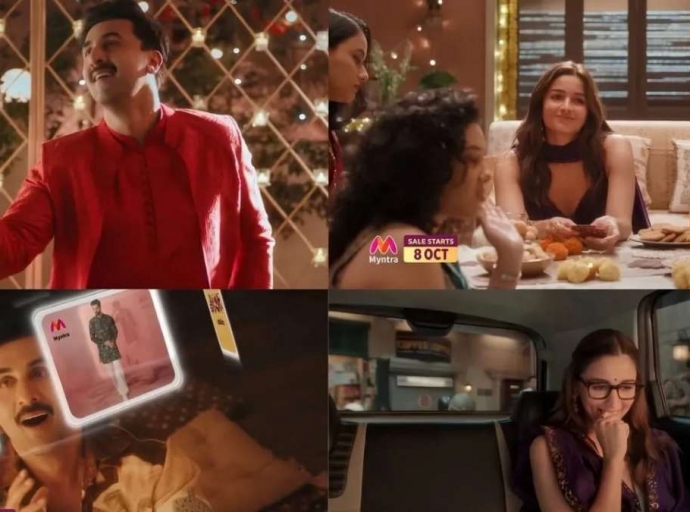
The launch of the ‘Beauty Made Personal’ campaign, featuring Alia Bhatt, signals a deliberate shift by Myntra Beauty to capture a larger share of India’s $20 billion beauty and personal care market. By utilizing Bhatt’s high cultural resonance, the platform is addressing the ‘information overload’ that often paralyzes digital shoppers. This initiative moves beyond traditional awareness, targeting specific consumer pain points such as skincare personalization and the complexities of the 10-step K-Beauty routine. Industry data suggests, personalized recommendations can increase conversion rates by up to 15 per cent, a metric Myntra is pursuing through its integrated in-app diagnostic tools and curated global trend galleries.


Technological interventions in authentic sourcing

A critical component of this 2026 strategy is the emphasis on supply chain integrity and direct-to-brand sourcing. As the domestic market faces an influx of unverified third-party sellers, Myntra is positioning its ‘authenticity guarantee’ as a primary value proposition. This focus on verified products, supported by real-time reviews and a digitalized quality management system, aims to build long-term loyalty among Gen Z and millennial consumers. Shoppers are seeking clarity as they navigate evolving routines, noted Neha Gulati, Senior Director - Brand Marketing. By simplifying the transition from research to purchase, Myntra is attempting to bridge the gap between social media discovery and commercial fulfillment.


Capitalizing on the global trend influx

The campaign specifically highlights Myntra’s role as a gateway for international trends, particularly the high-growth K-Beauty segment. By simplifying multi-step routines into accessible, shoppable formats, the platform is lowering the barrier to entry for complex skincare categories. This approach reflects a broader retail trend where platforms function as educational guides rather than just transactional hubs. As Myntra expands its portfolio of premium and global labels, the integration of interactive discovery features is expected to drive higher average order values and solidify its position as a leading destination for intent-led beauty consumption in India.


Myntra Beauty is a dedicated vertical within the ABFRL-backed fashion giant, offering over 1,500 international and domestic brands across skincare, makeup, and hair care.Focused on the Indian market, the platform plans to double its premium portfolio by 2027, leveraging AI-led personalization and celebrity-backed campaigns to sustain high double-digit growth.

Myntra Beauty eyes larger share in personal care market with new campaign launch

Soch launches three new stores in Malaysia

Expanding its presence in Malaysia, evening and occasion wear brand Soch has launched three new stores in Klang, Johor Bahru, and Kuala Lumpur. This move brings Indian ethnic wear directly to shoppers in Southeast Asia.

Read our latest issue

Vinay Chatlani, Co-founder and CEO, Soch Apparels, says, Malaysia allows the brand to carry that promise overseas into a market that deeply understands celebration, heritage, and community. With these stores, it lays the foundation for Soch to be recognized as not just India’s ethnic wear leader, but as a global brand with contemporary cultural relevance, he adds.

Fashion Guru

To facilitate this growth, Soch has partnered with Malaysia-based retail business Venturist Sdn Bhd under a franchise agreement.

The brand plans to add two to three more stores in Malaysia over the next three to five years. Soch will tailor its product mix for the local, tropical climate, offering a curated selection of sarees, kurtis, lehengas, and fusion wear, among other garments.

Refer

Soch Apparels currently operates over 175 stores across 68 Indian cities and has already debuted in the Canadian market. The expansion into Malaysia is a part of Soch's broader commitment to global retail, with the label actively exploring opportunities in other regions, including the rest of Southeast Asia, the Middle East, the UK, and the US.

Know More

SochApparels

Suta goes international with first flagship store in Mauritius

Marking a significant milestone in its retail evolution, homegrown Indian ethnic wear brand Suta has inaugurated its first international store in Mauritius. Situated at the Cœur de Ville mall in Grand Bay, the 410-sq-ft outlet serves as the brand’s debut footprint outside India.

The expansion represents a strategic transition for the label, which has cultivated a dedicated community of patrons through its digital-first approach and extensive network of over 20 experiential stores across major Indian cities including Mumbai, Delhi, and Bengaluru.

DFU Profile

Designing an immersive global footprint

The Mauritius storefront mirrors the brand's signature aesthetic, blending earthy, handcrafted textures with a contemporary retail design. Featuring a cement-textured façade, antique-style lighting, and a storytelling-driven mural, the space is engineered to replicate the ‘warmth and narrative’ of the brand’s domestic locations. Beyond the curated product assortment, the store offers a premium service suite - including in-store tailoring, customization, and lifetime alteration - that reflects the brand's commitment to long-term customer relationships and operational service standards. This entry into Mauritius is intended to leverage the region’s cultural affinity with India while testing the global appeal of Suta’s artisanal sarees and apparel.

Publications Portfolio

Strategic growth and operational discipline

The move into international retail follows a period of rigorous domestic scaling, where the brand has prioritized physical retail as a primary growth lever.

Operating under a bootstrapped financial model since its 2016 inception, Suta has focused on high-footfall locations and profitability over aggressive capital-heavy expansion. By leveraging data-backed insights from pop-up events and digital sales, the brand maintains a disciplined approach to new market entry.

Join our community

While the focus remains on deepening its presence in India’s metro and Tier-I markets, this international foray signals a calculated effort to diversify its reach, ensuring that the brand’s emphasis on handcrafted heritage continues to resonate with a broader global consumer base.

Founded in 2016 by sisters Sujata and Taniya Biswas, Suta is a premium lifestyle brand that revitalizes traditional Indian handlooms through a modern, mindful design philosophy. Offering sarees, apparel, and accessories, the brand works with over 17,000 artisans. It aims to achieve sustainable long-term growth through experiential retail expansion.

Visit for more

Suta goes international with first flagship store in Mauritius

Premium, phygital, profitable, the new playbook for Indian retail

India’s retail has moved past the era of just availability. For decades, the biggest challenge for global and domestic fashion brands was building a supply chain that could reach a fragmented population. Today, that hurdle has been cleared. With digital penetration ensuring that Tier-II city consumer can order the same limited-edition sneaker just like a Mumbaikar, the physical store is being forced to justify its existence through something far more elusive than inventory: the high-octane experience.

Store ‘dwell time’ boosts conversions

In 2026, the differentiator for apparel giants is not just the breadth of their SKU count but the depth of their consumer engagement. Recent fiscal quarter data reflects organized retail space in India grown over 25 per cent compared to pre-pandemic benchmarks. This is not just a quantitative increase; it reflects a qualitative shift towards theatre-led retail. Flagship stores are increasingly dedicating up to 30 per cent of their shop floors to non-commercial activities, such as customization zones, digital styling pods, and curated lounges.

This is due to a growing consumer demand for shopping as a leisure activity rather than a chore. Analysts note that brands focusing on ‘dwell time’ are seeing a 15 to 20 per cent higher conversion rate compared to traditional high-volume layouts.

The urban sprawl into aspirational belts

The geographic weight of Indian retail is tilting. While metros remain the primary revenue drivers, the growth velocity in Tier-II, III cities like Lucknow, Indore, and Coimbatore is outstripping the national average. This ‘rurban’ middle class is flush with disposable income and an appetite for premiumization that matches metro standards. Retailers are responding by launching hybrid concept stores blending local cultural motifs with global aesthetics. This strategy reduces the risk of a generic brand experience and fosters local loyalty. Economic indicators suggest that per-capita spending on lifestyle apparel in these emerging clusters is projected to grow at a CAGR of 12 per cent over the next three years, led by a demographic dividend where nearly 65 per cent of the population is under the age of 35.

Digital integration and the tech-Infused fit

The modern fashion storefront is becoming a physical manifestation of a brand’s digital ecosystem. The integration of Augmented Reality (AR) in trial rooms and Artificial Intelligence (AI) in inventory management is solving the perennial retail headache: the returns crisis. By allowing customers to visualize garments in different lighting or virtually wear accessories, brands like Zara and H&M are reducing return rates, which often plague e-commerce margins. The example of a leading domestic ethnic wear brand revealed that implementing 3D body-scanning technology in their flagship outlets led to a 40 per cent reduction in alteration requests and a marked increase in customer satisfaction scores. This technological layer ensures that the physical store remains the most efficient point of sale.

The economic imperative of sustainable scale

Despite the optimism, the sector faces a tightening of operational margins due to rising real estate costs and supply chain volatility. The challenge for 2026 lies in scaling these high-cost experiential models without eroding profits. Leading retailers are adopting green lease agreements and energy-efficient store designs to manage long-term overheads. The broader sector impact is clear: the market is consolidating around players who can master the phygital balance. As the retail sector's contribution to India’s GDP continues to hover around the 10 per cent mark, the move from access-driven to experience-driven commerce is not just a trend, it is a survival mechanism in a market where the consumer is more informed, more impatient, and more demanding than ever before.

Moreover,. India’s retail evolution is anchored by a massive, young consumer base with rising purchasing power. Most domestic fashion retailers are focusing on lifestyle segments, specifically athleisure and premium ethnic wear, while aggressively expanding into smaller cities. With a shift from unorganized mom-and-pop shops to structured mall ecosystems, the sector is eyeing a double-digit growth trajectory, aiming for a trillion-dollar valuation by the end of the decade.

Premium, phygital, profitable, the new playbook for Indian retail

Forever 52 targets 100 stores by 2026-end

Having ramped up its physical retail presence with the launch of four new EBOs across Central and Western India, professional beauty brand Forever 52 plans to expand the brand's physical retail network to 100 outlets by 2026 -end. It also aims to reach a revenue milestone of Rs 400 crore for the FY26–27.

Bridging the gap for professional-grade beauty

Forever 52 has established itself as a significant player in the Indian beauty sector by focusing on the specialized requirements of professional makeup artists, bridal professionals, and beauty academies. Unlike many mass-market cosmetic brands, Forever 52 initially secured market share through organic adoption within these professional circles, leveraging strong word-of-mouth recommendations. The brand’s product portfolio, which includes high-coverage foundations and professional-grade palettes, has resonated with consumers seeking performance-oriented products at accessible price points. This strategic emphasis on professional utility has allowed the brand to successfully transition into a mainstream favorite for everyday consumers.

Know More

Omnichannel strategy in Tier I and II cities

The company’s growth strategy heavily prioritizes physical retail in Tier I and Tier II cities, viewing these urban centers as the primary catalysts for its next phase of expansion. By integrating its physical storefronts with a robust multi-channel ecosystem - comprising modern trade, general trade, e-commerce platforms, and a proprietary mobile application - Forever 52 is creating a seamless purchasing experience. This balanced approach ensures the brand maintains accessibility while fostering deeper consumer engagement. As it approaches its 100-store milestone, the brand remains committed to delivering professional-quality formulations that address the evolving beauty preferences of the diverse Indian market.

DFU Profile

Forever 52 is an international professional makeup brand offering comprehensive beauty, skincare, and cosmetic collections. The company focuses on making professional-grade products accessible to both makeup artists and daily consumers. With an aggressive retail expansion strategy and strong e-commerce presence, the brand is targeting substantial revenue growth through 2027.

Publications Portfolio

Forever52

Azorte expands Mumbai presence with a new neo-store at Phoenix MarketCity

Reliance Retail's premium fashion and lifestyle brand, Azorte, has expanded its presence in Mumbai by launching a new flagship-style store at Phoenix MarketCity.

Designed as a ‘neo-store,’ the new store fuses physical retail with advanced technology to create an immersive and efficient shopping experience.

Spanning 14,881 sq ft, the store reinforces the brand’s position as a key destination in the premium fashion segment. It was inaugurated by actor and style icon Khushi Kapoor, signaling Azorte's appeal to the youthful and fashion-forward audience.

The store incorporates several digital innovations to enhance the customer journey and operational efficiency. These include Smart Trial Rooms offering contextual product recommendations and allowing shoppers to request additional sizes or products at the touch of a button; Interactive Digital Screens to showcase extended collections (endless aisle) and act as dynamic digital signage; RFID & QR Code Technology for efficient inventory management, ensuring better stock availability and fewer gaps; Self Check-Out Counters to provide a seamless and time-efficient option for customers to complete their purchases and a frictionless check-in service for customers who prefer a self-guided shopping experience.

Azorte focuses on offering a curated mix of global and contemporary styles under one roof, appealing to the segment looking for accessible luxury and variety. The brand caters to product categories including womenswear, menswear, kidswear and accessories.

This new store launch marks Azorte's 40th store across India, highlighting Reliance Retail's rapid expansion strategy in the country's fast-growing urban fashion market.

Azorte expands Mumbai presence with a new neo-store at Phoenix MarketCity

The Physical Wall: How established brands are reclaiming the High-Street from D2C disruptors

As 2025 draws to a close, the Indian fashion industry is witnessing a massive strategic shift from the digital ether back to the physical pavement.

For the last several years, the narrative was dominated by the meteoric growth of funded D2C disruptors like Snitch, BlissClub, and The Souled Store.

Know More

These players used low-cost digital entry and venture capital to bypass traditional gatekeepers, scaling rapidly on a diet of high-velocity "drops" and performance marketing. However, as we look toward 2026, the era of unbridled cash burn for customer acquisition is hitting a structural limit.

The "Physical Wall" has emerged as the definitive moat for established brands like ABFRL, Raymond, and Arvind Fashions, who are now leveraging their institutional balance sheets and deep supply chains to reclaim the high street.

Read our latest issue

The D2C sector in India grew at a staggering CAGR of 40% between 2020 and 2024, reaching an estimated market value of $100 billion by 2025.

This growth initially blindsided the market, forcing established retailers to defend their territory against players who operated without the baggage of legacy overheads.

This "blitzkrieg" triggered a period of margin compression as giants were forced to discount heavily to match D2C prices.

Publications portfolio

Furthermore, established players faced a "trend lag" where the 15-day design cycles of disruptors made traditional six-month calendars look prehistoric.

Digital-first brands also mastered "thumb-stop" marketing, siphoning off the top-of-the-funnel traffic that previously flowed naturally to shopping malls.

But the tide is turning. The "Physical Wall" represents a shift where the cost of digital-only growth has become prohibitive.

DFU Profile

Customer Acquisition Costs (CAC) for fashion in India now range from ₹800 to ₹2,000, often swallowing 50% of the total order value.

This "leaky bucket" makes the stability of a physical storefront not just attractive, but essential for survival.

Redefining the 2026 Competitive Matrix

Strategic Pillar

Funded D2C Disruptor Move

Established Brand Strategy (2026)

Capital Efficiency

High "Cash Burn" for reach; high CAC.

Focus on Customer Lifetime Value (LTV).

Supply Chain

Third-party/White-label (Flexibility).

Full Vertical Integration (Cost Control).

Real Estate

High-street "Hype" stores in Tier-I.

"Lease Lock" in Tier-II/III (Bharat Expansion).

Logistics

Q-Commerce reliance (10-30 mins).

Omnichannel Mirroring (Ship-from-Store).

Product Cycle

14-day "Fast-Fashion" drops.

12 "Monthly Capsules" (Agile Manufacturing).

Securing the "Bharat" perimeter through real estate

The most aggressive tactical shift for 2026 is the "Lease Lock" strategy. In the first half of 2025 alone, funded D2C disruptors doubled their retail footprint, accounting for nearly 18% of all retail leasing in India.

While this influx triggered a bidding war in premium Tier-I malls, established brands are moving beyond the saturated metros.

Fashion Guru

The battle for "Bharat" is now being fought in the commercial hubs of Ludhiana, Indore, and Coimbatore, where leasing volumes have surged by over 20%.

Established players are securing long-term, ten-year leases with escalations tied to store performance rather than market speculation, effectively locking out smaller competitors who lack the capital for such commitments.

 Join our group

This strategy is bolstered by the "Compact-Format Advantage." By utilizing smaller, 800–1,200 sq. ft. Exclusive Brand Outlets (EBOs), established brands achieve a "Density Advantage" that disruptors cannot easily replicate.

These stores act as physical anchors for an omnichannel strategy, providing a touch-and-feel experience that reduces the industry-standard 25–30% online return rate to less than 12% through in-store trials and local pick-ups.

Sustainability

Weaponizing the supply chain

The true strategic advantage of established brands in 2026 lies in their ownership of the "loom."

While D2C brands often struggle with quality inconsistencies and "leaky bucket" unit economics due to their reliance on third-party manufacturers, legacy giants like Raymond and Arvind own the entire value chain.

As one CEO of a legacy apparel conglomerate noted, "Cash is a tactical tool, but a resilient supply chain is a strategic weapon. While disruptors won the battle for clicks, the war for the wardrobe is won by those who control the margin at every step."


By 2026, these established players are redefining their manufacturing into 12 "Monthly Capsules" rather than the traditional two-season calendar. This allows them to match the visual velocity of Instagram-first brands while maintaining a much lower cost-per-unit.

Unit Economic Comparison (Estimated 2026)

Metric

Funded D2C Brand

Established Vertical Brand

Gross Margin

55% - 60%

65% - 72%

Marketing/CAC

25% of Revenue

8% - 12% of Revenue

Logistics/Returns

15% (High RTO)

6% (Store-led fulfillment)

EBITDA Margin

5% - 8%

18% - 22%

 Transforming stores into service hubs

Established brands are also redefining the role of the retail associate. By training floor staff to act as "Style Influencers," they are using the physical store as a studio for social selling.

Staff manage localized WhatsApp groups and live-stream styling sessions for their top customers, creating a deep-rooted loyalty that algorithms cannot manufacture.

Also read

This human-led approach is a direct counter to the "Utility-First" model of Q-Commerce.

While platforms like Zepto deliver basics in under 15 minutes, established brands are using these platforms as "Dark Store" partners.

By leasing sections of underperforming Tier-I stores to Q-commerce players, they capture a customer via a utility purchase, like socks or t-shirts and then use that data to drive them toward a high-margin, occasion-wear purchase at their nearest physical flagship.

Technology

C-Suite 2026 Strategic Outlook: Resilience over burn

The financial focus has shifted toward a "P&L Correction." The market is no longer rewarding top-line growth at the expense of profit.

This has led to the rise of "Inventory-as-a-Service" (IaaS), where physical stores act as zero-inventory showrooms and orders are fulfilled from localized micro-fulfillment hubs, effectively turning deadstock into a thing of the past.

Arvind Fashions, for instance, reported a 27% year-on-year increase in profit in late 2025 by shifting toward a consignment-led model and increasing their EBO contribution to 43% of total revenue, proving that scale and physical presence are the ultimate stabilizers.

WindUp 2025

Editor’s Conclusion: The great synthesis

The narrative of "Established vs. D2C" is maturing into a story of "Scale vs. Speed." The most successful players in 2026 are the ones who synthesize the two: adopting the digital agility of disruptors while using the physical store as the ultimate high-margin fortress.

The "Physical Wall" is not a barrier to innovation; it is the foundation upon which the next decade of Indian retail will be built. In 2026, the brands that thrive will be those that realize the high street is not just where you sell, it’s where you win.

Visit for more

D2CFashion

StyleBuddy launches new service to offer professional advice in reduced time

Personal styling platform, StyleBuddy has launched a new service called ‘Styled Looks’ that dramatically cuts the time and cost for users to get professional fashion advice.

Read our latest issue

Users receive five complete, personalized outfit recommendations. The lookbook is delivered within a revolutionary turnaround time of just 30 minutes. The looks are curated by a human stylist who utilizes rapid technology integration for speed. Each look includes clothing, accessories, and styling notes.

Shoppable links can be included, often as an optional add-on for an additional fee. The service is available for an introductory price of just Rs. 499.

REFER

To use the service, customers follow a simple process. They upload their photo to the StyleBuddy platform. They provide details about the specific occasion they are styling for (eg, a wedding, Diwali celebration, business meeting, or dinner date).

An expert stylist uses this information to deliver the five curated looks to the user within 30 minutes.

Fashion Guru

The ‘Styled Looks’ service aims to democratize professional styling by making it accessible and affordable to everyone, not just the elite. It addresses the common challenge of ‘choice overload’ and last-minute panic by providing a quick, expert-vetted solution for high-stakes events.

Visit for more

StyleBuddy

Latest Publications

Image

Join Our Group

Join Our Group