
India’s new inflation formula puts fashion, not food, at the center of growth
16 February 2026, Mumbai
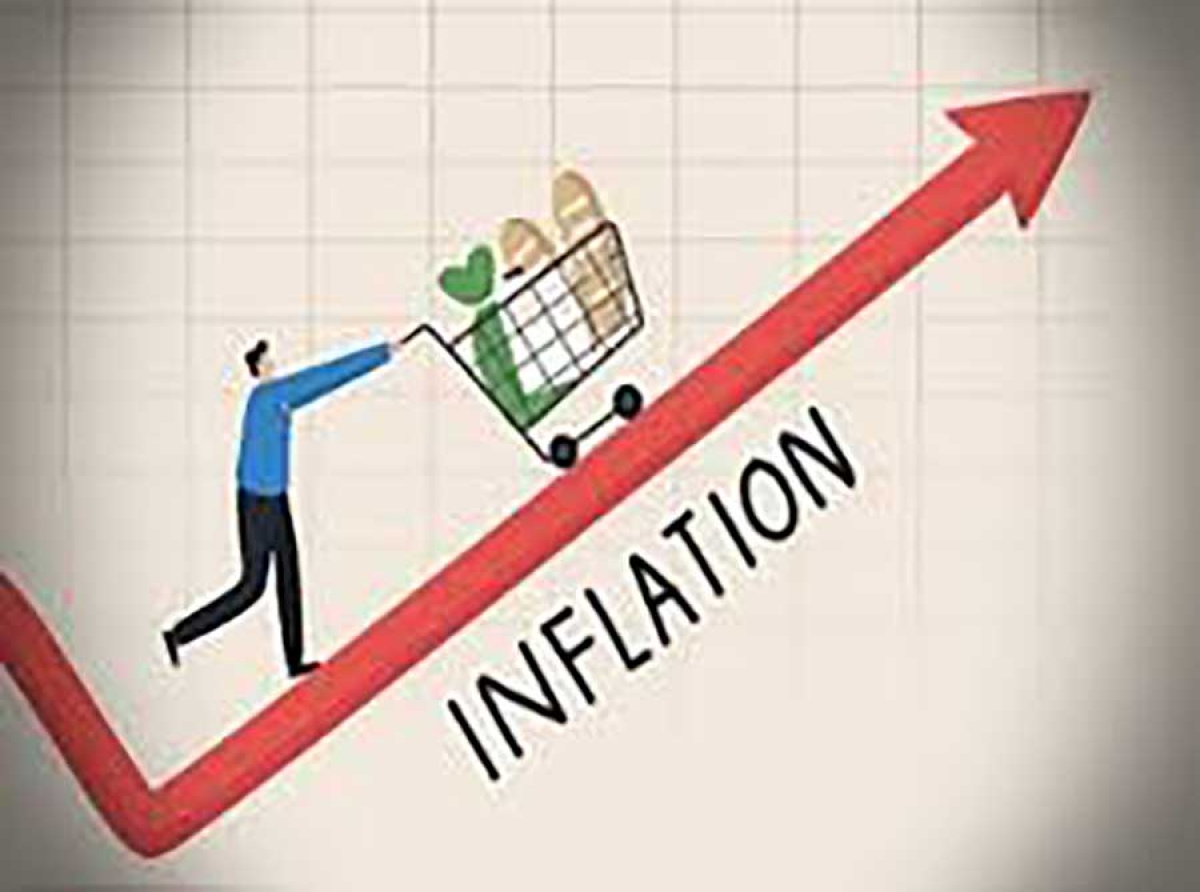
India’s inflation math has quietly undergone one of its most consequential rewrites in over a decade. With the government operationalising the first Consumer Price Index (CPI) series under a 2024 base year, the country has effectively updated the lens through which policymakers, investors and retailers read demand.
The shift replaces the long-standing 2012 structure, an index designed for a consumption pattern that belonged to another India, one where kitchen staples dominated household budgets and lifestyle purchases were peripheral.
That world has receded. In its place stands an aspirational, brand-hungry, digitally connected middle class.
The recalibration lands at a moment: India’s apparel retail economy alone is expected to be worth roughly $115-116 billion this year, with organized fashion chains racing into smaller cities.
By trimming food and beverage weightage from 45.86 per cent to 36.7 per cent , the CPI now gives greater statistical power to discretionary spending, precisely the categories where apparel and lifestyle brands compete. In effect, hemlines and hoodies will now influence monetary signals almost as much as onions and wheat.
When fashion starts steering inflation
The most striking feature of the new framework is not just what was reduced, but what was added. For the first time, prices scraped from leading online marketplaces including Myntra and Amazon are embedded directly into official calculations. This formal recognition of e-commerce acknowledges a structural truth: the modern Indian wardrobe is increasingly purchased through apps, not bazaars.
As a result, fashion discounts, festive sales, and omnichannel promotions now ripple through national inflation data. Lifestyle consumption is no longer anecdotal, it is measurable macroeconomics. With organized online retail projected to account for a quarter of apparel sales by 2030, these price signals will increasingly shape interest rates, credit costs and investment flows.
The numbers behind the wardrobe economy
The industry’s growth story becomes clearer when the latest market estimates are laid out.
Table: India apparel & retail outlook (FY25-26)
|
Apparel segment (2025-26) |
Market share/Value |
Growth projection (CAGR) |
|
Total Domestic Market |
$194 bn |
7-10% |
|
Apparel (Clothing) |
$115 bn |
10.5% (FY26) |
|
Women’s Apparel |
$53.13 bn |
Leading Segment |
|
Online Fashion |
$35 bn |
22.20% |
|
Technical Textiles |
$30 bn |
High-Growth Niche |
The statistics shows how decisively fashion has moved from non-essential to growth engine. Clothing now accounts for well over half of total retail expansion, while women’s wear anchors the category. Online fashion’s over 22 per cent growth rate signals where future margin battles will play out. Meanwhile, technical textiles performance fabrics, sportswear, protective materials hint at a manufacturing upgrade story alongside retail growth. For investors, these aren’t soft lifestyle indicators; they are hard capital allocation cues.
Digital prices become the new benchmark
The CPI overhaul also changes how those prices are collected. Data now flows weekly from nearly 1,400 urban markets, including digital storefronts. That matters because online apparel prices fluctuate faster than traditional retail, driven by flash sales and algorithmic discounts. Capturing those swings creates a more realistic deflator for retail margins. For expanding chains like Reliance Retail’s youth brand Yousta or Tata Group’s value play Zudio, this statistical clarity reduces planning risk.
When inflation volatility falls, store rollout decisions become easier to justify. Rental contracts, inventory cycles and private-label sourcing can be modelled with greater certainty especially in Tier-II, III 2 3 cities, which are now the true engines of consumption.
Read our latest issue
Monetary policy meets the mall
A more balanced CPI has another consequence: it sharpens the view of core inflation for the Reserve Bank of India. Food shocks, once the main driver of headline inflation often masked steady growth in discretionary sectors. By muting that noise, the central bank gets a clearer read on underlying demand. That potentially smoothens the path for rate stability or cuts, which in turn lowers the cost of capital for store-heavy retail models.
In an industry where expansion depends on leases, fit-outs and working capital, cheaper credit can translate directly into faster square-foot growth. The result: CPI reform may become an unlikely catalyst for mall construction and franchise expansion.
The value-fashion playbook comes of age
If the new CPI captures India’s changing consumption DNA, the most vivid corporate example of that shift is Zudio, operated by Trent Ltd. The brand has crossed the $1 billion revenue mark by doing something counterintuitive in an e-commerce age: doubling down on offline stores. Its model is ruthlessly simple. Keep prices under Rs 999. Focus on Tier-II and smaller cities. Skip the 20-30 per cent logistics drag of online fulfillment. And drive in-store conversion rates that reportedly touch over 80 per cent. At roughly Rs 7,000 crore in revenue, the chain now outpaces the combined India business of global fast-fashion heavyweights such as Zara and H&M. The strategy mirrors the CPI’s logic perfectly: value-conscious but lifestyle-oriented consumers spending steadily rather than splurging occasionally.
A shift, not a statistical tweak
Stepping back, the implications stretch beyond retail. Apparel and textiles contribute roughly 5 per cent to India’s GDP and employ about 45 million people. With an expected double-digit growth path and increasing consolidation under organized players, the sector is becoming one of the country’s most reliable consumption stories. By formally recognizing lifestyle spending in inflation metrics, policymakers have validated what brands already knew: the Indian consumer has traded up. Clothing, athleisure and occasion wear are no longer discretionary indulgences they are regular budget items. The CPI’s new base year doesn’t just update a spreadsheet. It acknowledges that the economy itself has changed. And for fashion retailers and investors alike, that recognition may prove more valuable than any seasonal sale.










 Get in Touch!
