
29 January 2026, Mumbai
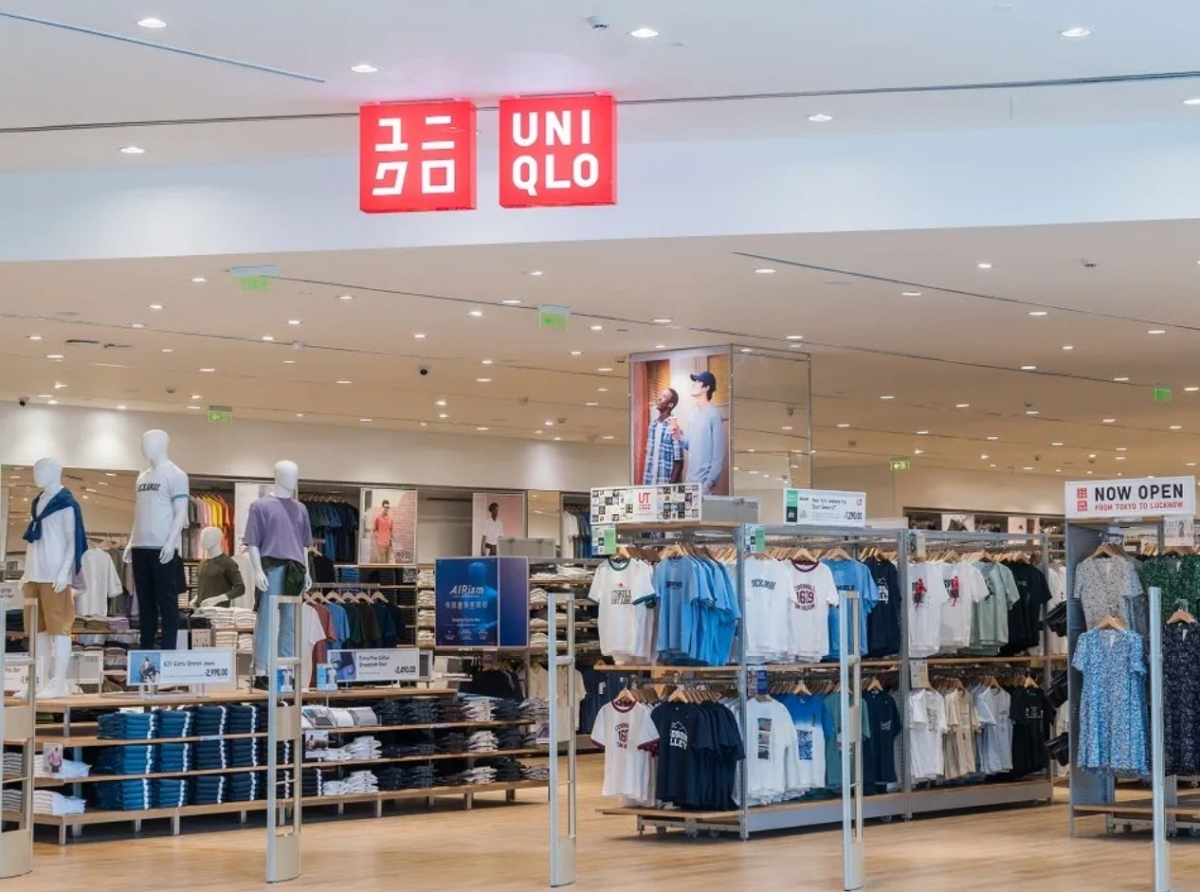
In the whirlwind of Indian fashion retail where global giants chase fleeting trends and hype-driven launches Japan’s Uniqlo has quietly rewritten the rules. Its strategy is not about runway glamour or viral collaborations. Instead, it embraces a philosophy rooted in Japanese minimalism: perfection in the mundane.
Since entering India in 2019, Uniqlo has steadily defied the fast-fashion norm, emerging as a profitable and disciplined player. By FY25, the brand reported a 44 per cent revenue increase, crossing Rs 1,100 crore and more than doubling its net profit, a remarkable feat in a market notorious for volatility.
Efficiency over expansion
Unlike many competitors who chase sheer store volume, Uniqlo India has opted for precision and operational efficiency. With a lean footprint of just 17-18 stores, the brand has managed revenue per store and profit margins that rival larger players.
Table: Comparative market snapshot (FY25)
|
Metric |
Uniqlo India (FY25) |
Zara India (Inditex Trent) |
H&M India |
|
Revenue |
Rs 1,100+ cr |
Flat Sales (FY25) |
Single-digit growth |
|
Growth Rate |
44% YoY |
8% (FY24) |
11.4% (FY24) |
|
Net Profit |
Rs 178.4 cr |
Rs 244 cr (FY24) |
Rs 7 cr (FY24) |
|
Profit Margin |
15% PAT |
8.80% |
0.20% |
Since 2019, Uniqlo has achieved nearly 60 per cent CAGR, reaching profits within three years an accomplishment that underscores the strength of its business model.
Selling reassurance
Where others chase trends, Uniqlo has made a bet on reliability. The insight is simple yet counter-intuitive: Indian consumers don’t always want novelty they want something that works.
• The ‘safe’ wardrobe: Competitors sell expression; Uniqlo sells reassurance. Consistent sizing, classic cuts, and timeless pieces reduce the friction of daily choices.
• Functional innovation: Technologies like AIRism, engineered for India’s humid climate, and HeatTech, catering to northern winters, have turned basic apparel into essentials.
• Subtle branding: In a visually noisy market, the minimalistic, logo-light aesthetic becomes a powerful differentiator, signalling quality without ostentation.
Quietly local, the kurta experiment
Uniqlo’s approach to India isn’t just global standardization, its sensitive localization. Realizing that nearly 70 per cent of Indian women’s apparel expenditure is on ethnic wear in 2019, Uniqlo launched its kurta collection, designed in collaboration with Rina Singh. This wasn’t a simple copy-paste of tradition. The high-tech Toray rayon and premium linen brought comfort and durability to a classic silhouette. Interestingly, demand exceeded local expectations, and the collection is now exported to 24 countries, including the US and Japan. This experiment showcased that cultural sensitivity and functional design can coexist, enabling Uniqlo to stand out in a crowded market.
The challenge of standing still
Despite stellar growth, Uniqlo’s model is not without risks. “The current scale is still small for a market of this size. India will play a key role in Uniqlo’s global ambition of 10 trillion yen in sales,” notes Kenji Inoue, COO & CFO, Uniqlo India. India mandates 30 per cent local sourcing for single-brand retail. Uniqlo currently sources 15-18 per cent, with plans to reach the regulatory threshold to facilitate growth. What’s more older consumers value reliability, but younger shoppers are increasingly trend-driven, posing challenges for a slow-moving, pre-planned inventory model. Since the products are designed a year in advance. Sudden shifts in weather or consumer preference could create stock imbalances.
The road to Rs 3,000 crore
Uniqlo’s ambition is clear, to reach Rs 3,000 crore in revenue within 2-3 years. The roadmap combines physical expansion, digital acceleration, and local manufacturing. The plan is a metro-first expansion. Flagship stores in Bengaluru, Pune, and Mumbai will serve as brand beacons rather than a mass-market footprint. E-commerce will boost the brand’s reach and serve as a force multiplier for awareness. Increased local production will reduce global supply chain risks and cost volatility while meeting regulatory requirements.
If executed well, this strategy could cement Uniqlo not just as a global import, but as a homegrown favorite for urban India, blending trust, innovation, and subtle style.









 Get in Touch!
