
Union Budget 2026-27 strengthens India’s strategic dominance in global handloom export
23 February 2026, Mumbai
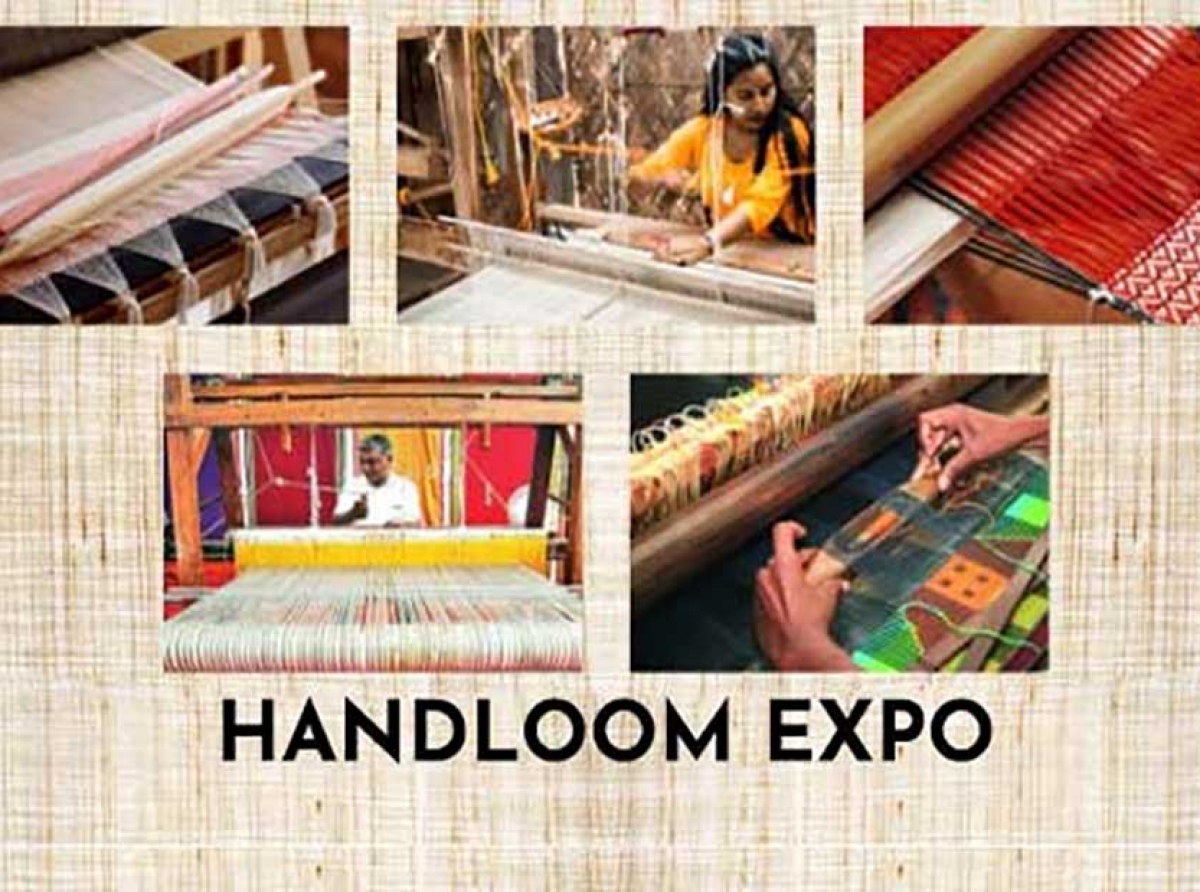
Strengthening India’s dominance in the global handloom exports, the Ministry of Textiles has inaugurated the Special B2C Handloom Expo 2026 in New Delhi. This initiative arrives alongside the Union Budget 2026-27, which has established the National Handloom and Handicraft Program to unify fragmented schemes into a single, high-impact framework. With India currently producing approximately 85 per cent of global handwoven fabric, the government’s focus on direct consumer engagement is a primary lever for achieving the Vision 2030 export target of $100 billion for the broader textile sector.
Budgetary stimulus and market realignment
The FY26-27 roadmap introduces the Mahatma Gandhi Gram Swaraj Initiative, specifically designed to enhance global market linkages and branding for traditional weaves. Market projections indicate the global handloom segment will reach $9.67 billion in 2026, growing at a 9.8 per cent CAGR. By facilitating direct B2C sales, the National Handloom Development Corporation (NHDC) is ensuring that artisans – 71 per cent of whom are women - retain a higher percentage of the retail value. This strategic intervention addresses a critical industry pain point: traditionally, over 60 per cent of weavers earned less than the mandated minimum wage due to complex intermediary layers.
Sustainable compliance and digital scaling
Under the new Tex-Eco Initiative, the NHDC is aligning traditional production with international green standards to capture the premium ‘slow fashion" market in North America and Europe.
Digitalization remains the backbone of this expansion, with the e-Dhaga app and the IndiaHandmade.com portal providing 24/7 procurement and sales visibility. Combined with liquidity support for textile MSMEs, these platforms are transforming the sector into a structured, globally competitive entity.
Analysts suggest, the convergence of technology and traditional craftsmanship will be the decisive factor in elevating India’s textile share in the global value chain.
Established in 1983 under the Ministry of Textiles, the NHDC acts as the primary implementation agency for raw material supply and marketing interventions in the handloom sector. It manages the supply of yarn and dyes to millions of weavers while promoting the India Handloom Brand globally. Under the 2026-27 growth strategy, the NHDC is focused on scaling digital B2C platforms and modernizing traditional clusters to achieve double-digit revenue growth and enhanced export parity.









 Get in Touch!
