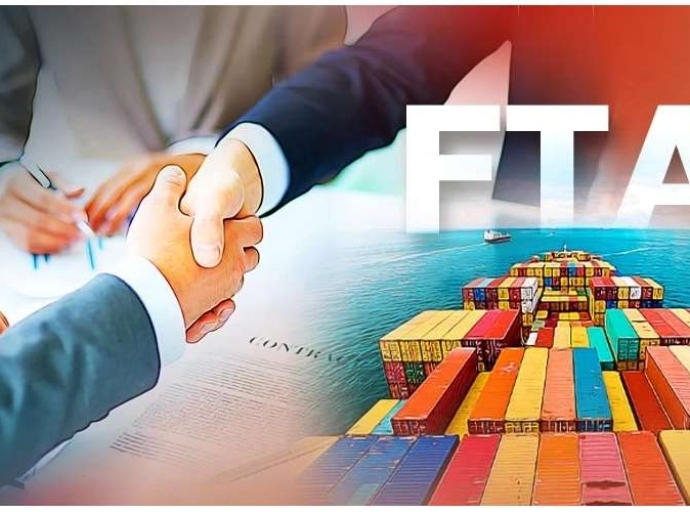
India’s growing push to increase preferential trade agreements is expected to reshape the fashion, apparel and luxury retail markets. With New Delhi targeting preferential access for nearly 75 per cent of its global commerce, tariff liberalisation is opening new export opportunities while simultaneously exposing domestic manufacturers and retailers to greater import competition.
Speaking at a bilateral business gathering in Tokyo, Union commerce and industry Minister Piyush Goyal said India is negotiating trade agreements with eight to nine additional economic blocs and individual countries, adding another $15 trillion to the GDP. Over the past four years, India has concluded nine agreements covering 38 developed countries with a combined GDP of around $60 trillion. This could therefore give Indian businesses preferential access to almost $85 trillion market, deepening the country's integration with global value chains.
For fashion and textiles, however, the opportunity comes with a caveat: cheaper access to overseas markets also means easier access for overseas products into India.
MUCH MORE
The import-export imbalance
Trade patterns so far have shown why the industry's optimism is tempered by concerns over import penetration. Trade data compiled by the Centre for Monitoring Indian Economy reveals trade deficits with several major FTA partners have grown following implementation, as import growth outpaced India's exports.
Table: Trade deals and their impact
|
Partner/trade agreement bloc
|
Year 0 deficit index (baseline)
|
Post-FTA peak movement index (years)
|
Year 10 Post-FTA index level
|
Primary textile, fiber, yarn & apparel impact
|
|
South Asian Free Trade Area (SAFTA)
|
100
|
395 (Year 6-7)
|
275
|
Spike in zero-duty cotton ready-made garments and woven imports
|
|
Association of Southeast Asian Nations (ASEAN)
|
100
|
185 (Year 6)
|
305
|
Large-scale entry of synthetic filament fabrics and polyester yarn
|
|
South Korea
|
100
|
230 (Year 8)
|
260
|
Inflow of high-performance technical textiles and specialty polymer fibers
|
|
Japan
|
100
|
140 (Year 8)
|
135
|
Inflow of precision spinning machinery, industrial textiles, and specialty dyes
|
The pattern highlights the central policy challenge. Tariff concessions can lower input costs and improve export competitiveness, but without adequate rules of origin and domestic capacity, the same concessions can intensify competition for Indian manufacturers.
VIEW
Apparel faces a two-way squeeze
For apparel companies, the impact of trade liberalisation is unlikely to be uniform. Indian manufacturers operating in mass-market categories already face pressure from lower-cost production centres across South and Southeast Asia. Reduced tariffs on synthetic fabrics, woven textiles and finished garments can further narrow the cost advantage enjoyed by domestic producers.
High electricity costs, inverted duty structures affecting man-made fibres and compliance expenses add to the pressure. The result is a particularly difficult environment for manufacturers competing primarily on price.
The equation is different for premium and export-oriented businesses. Preferential access to specialised raw materials including extra-fine merino wool, technical finishes and precision components can reduce input costs and allow Indian companies to develop higher-value products for international markets. The shift, therefore, is from simply increasing volumes to capturing more value at each stage of the supply chain.
SUSTAINABILITY
Luxury retail gets a pricing advantage
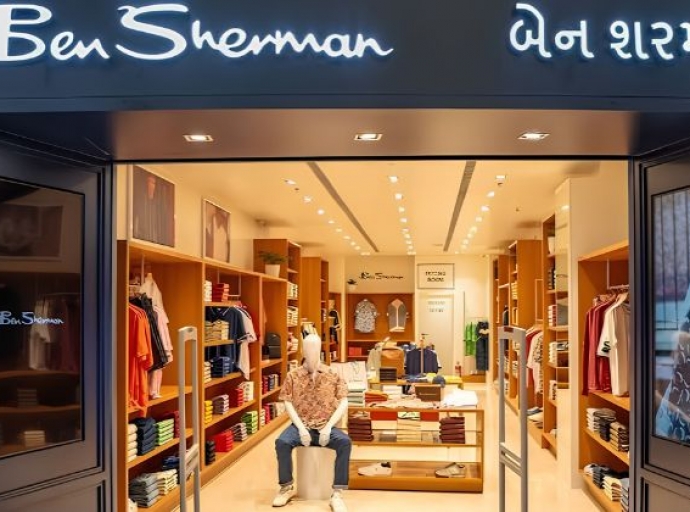
Luxury retail could emerge as one of the clearest beneficiaries of tariff rationalisation. For years, high import duties and related levies have contributed to significant price differences between luxury products sold in India and those available in shopping destinations such as Singapore and Dubai. International fashion houses, watchmakers and leather-goods brands have consequently operated in a market where affluent Indian consumers have often had a financial incentive to purchase overseas.
Lower tariff barriers can begin to narrow that gap. For luxury retailers, this creates an opportunity to convert international travel spending into domestic consumption. More competitive landed costs also strengthen the economics of opening stores in premium shopping centres and luxury precincts. The increase of high-end retail infrastructure, including developments such as Mumbai's Jio World Plaza, reflects this broader shift towards building an ecosystem capable of retaining more luxury spending within India.
Refer
Rules of Origin becomes critical
The benefits of tariff reduction, however, depend heavily on how preferential access is administered. Indian manufacturers remain concerned that products manufactured in third countries could enter through an FTA partner and receive preferential treatment without delivering meaningful domestic value addition. This makes country-of-origin certification and enforcement important.
For apparel and textiles, where supply chains can span multiple countries from fibre and yarn to fabric, processing and garment assembly the definition of substantial transformation will become commercially significant. Without strong safeguards, tariff preferences designed to support Indian manufacturing could inadvertently create new channels for import competition.
DFU Profile
Companies rethink the value chain
Indian companies are already adapting to a more integrated trade environment by moving towards higher-value segments. Arvind Fashions shows the broader direction. Rather than relying exclusively on mass-market apparel, the company has focused on premium menswear, performance-oriented textiles and bridge-to-luxury categories while using imported inputs and domestic manufacturing capabilities to protect margins.
The model points towards a wider industry shift: Indian companies need to combine efficient sourcing with stronger domestic value addition rather than compete solely on low production costs. Luxury-focused retailers are approaching the opportunity from the opposite direction. Reliance Brands, which operates a portfolio of international luxury and bridge-to-luxury labels in India, can benefit from lower import friction by bringing domestic pricing closer to international levels and expanding premium retail networks. For such businesses, tariff rationalisation is not simply a procurement advantage. It can become a demand-generation tool.
Trade policy meets industrial strategy
The larger question is whether India's expanding FTA network can translate preferential market access into sustained manufacturing competitiveness. The Commerce Ministry is pursuing a broader trade strategy aimed at integrating Indian businesses more deeply into global value chains while working towards $1 trillion in annual merchandise exports by 2030. For textiles and apparel, achieving that ambition will require more than tariff concessions.
Manufacturers will need scale, competitive energy and logistics costs, access to globally competitive fibres and technology, and stronger capabilities in design and value-added production. At the same time, policymakers will have to ensure that import liberalisation does not undermine the very manufacturing ecosystem that trade agreements are intended to strengthen.
For India's fashion economy, the FTA expansion therefore is neither an unqualified export opportunity nor an immediate import threat. It is a reset. Companies that can use preferential access to source better, manufacture smarter and move towards higher-value products could emerge stronger. Those competing primarily on protected domestic pricing may face a much tougher market. The country's trade strategy is opening the door to a far larger global marketplace. The next challenge is ensuring Indian fashion has enough competitive depth to walk through it without losing ground at home.
Latest Fashion News

















 Get in Touch!
