All Stories

Falguni Shane Peacock launches new collection, ’Ashen Roses’ on Day 3 of LFW XFDCI 2025

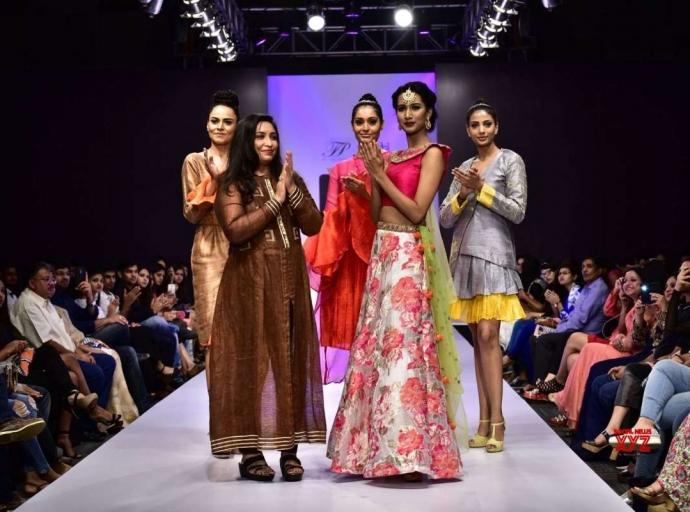
Fashion designers Falguni and Shane Peacock launched their new collection, ‘Ashen Roses,’ on the Day 3 of Lakme Fashion Week X FDCI 2025.

This collection represents a fresh take on the brand's established style – ‘familiar, yet completely new.’ The designers take their hallmark elements – bold silhouettes, detailed embellishments, and high glamour – and present them with a contemporary twist. They emphasis on evolution, rather than a complete overhaul, pushing their creative boundaries while staying true to the core of the Falguni Shane Peacock aesthetic. Every detail of this collection, from the embroidery to the shape, conforms to their signature style but with an unexpected, modern, and undeniably impactful feel.

The collection expands on the brand's well-known aesthetic, amplifying the dramatic elements. It features exaggerated proportions, surprising textures, and striking details that redefine the limits. Each piece of this collection is designed to be attention-grabbing, ensuring the wearer commands any room they enter.  

This season, the brand, Falguni Shane Peacock redefines the role of trousers in women's fashion. Challenging the concept of traditional styling, these pants offer versatility and power, proving that trousers can be as transformative as any couture gown.  

The brand, Falguni Shane Peacock is actively working towards adopting more responsible production practices. The brand has already integrated the ‘reduce, reuse, and recycle’ approach into their production and operations. They prioritize using only necessary materials to avoid excess, maximize reuse to minimize waste, and repurpose or recycle leftover materials from production, giving them a second life.

Filmmaker Karan Johar and actress Tamannaah Bhatia graced the runway for the acclaimed designers at LFW X FDCI 2025. Models walking the ramp showcased cropped jackets with sharp tailoring, power-shouldered mini dresses, feathered overcoats, and embellished gowns.

The collection also featured statement separates designed for layering, mixing, and reimagining.

Falguni Shane Peacock launches new collection, ’Ashen Roses’ on Day 3 of LFW XFDCI 2025

Month-Long Runway: Indian fashion ditches traditional seasons

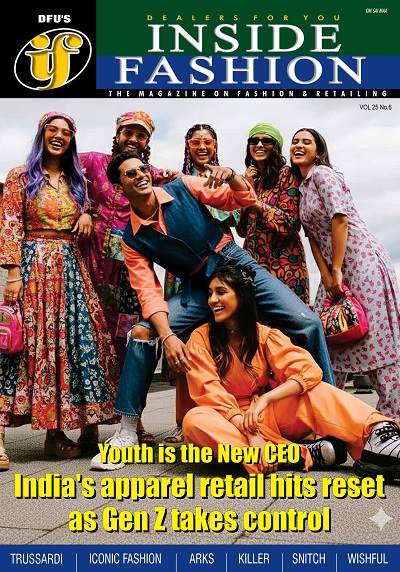
The traditional fashion calendar, marked by the biannual Spring/Summer and Autumn/Winter collections, is rapidly becoming a relic of the past. Indian retailers, including Arvind Fashions, Trent, Blackberrys, and Madura Fashion & Lifestyle, are embracing a hyper-responsive model, launching new collections almost monthly. As has been highlighted in a Financial Express (FE) article “Fashion seasons get shorter: Cut, stitch & sell in a month” this shift, which got a boost from Gen Z’s insatiable appetite and the rise of social media trends, is fundamentally altering the apparel industry, mimicking and even refining the backend agility pioneered by like Zara and Uniqlo.

The driving force behind this change is the relentless demand for novelty. As Kulin Lalbhai, Vice-Chairman and Executive Director of Arvind opined in the article, the idea of having something new every time one walks into a store or browses online is becoming important, it’s drive by the consumer's desire for constant stimulation.

A recent study by Vector Consulting and NielsenIQ reveals the extent of this change. Previously, 39 per cent of apparel collections took 6-9 months to reach the market. Now, almost 11 per cent are launched within 3-5 months, with 2 per cent achieving lead times below three months. This change in timelines signifies a supply chain restructuring.

Organizing the backend

This evolution goes beyond simply speeding up production. It's about meticulously organizing the backend, from yarn to retail floor, to achieve agility. P Senthilkumar, Senior Partner Vector Consulting, emphasizes the need for a ‘quick fashion model’ that re-aligns the entire supply-chain back-end from the yarn manufacturer to fabric supplier to the fashion brand. The idea is to think and deliver now.  

McKinsey & Company’s, ‘The State of Fashion 2023’ report had highlighted, consumers, especially Gen Z, are increasingly driven by "newness" and are willing to switch brands for frequent product drops. The report also highlights the growing importance of online platforms, where the speed of trend adoption is increased. Online fast fashion retailer Shein, demonstrates the extreme end of this model. They release thousands of items daily, leveraging data analytics and rapid prototyping to cater to real-time demand. This model, while raising ethical concerns, showcases the potential of ultra-fast fashion.

This process involves:

Streamlined supply chains: Retailers like Trent are focusing on their ecosystem to reduce manufacturing timelines by at least 20 per cent. "The whole ecosystem is coming together now a lot more than they did earlier," says P Venkatesalu, MD, Trent to FE, showcasing the collaborative nature of this transformation.  

Data-driven decisions: The utilization of real-time data to predict trends and manage inventory is crucial. Retailers are categorizing products into "core" and "dynamic," ensuring a steady supply of essentials while adapting rapidly to fluctuating demand for trendy items.

A survey by Boston Consulting Group (BCG) found that companies with agile supply chains are able to respond to market changes 20-30 per cent faster than their competitors. In fact, when the pandemic hit, retailers with agile supply chains were able to quickly move to producing loungewear and athleisure, whose demand grew. For example, Nike's "Consumer Direct Acceleration" strategy emphasizes agility and responsiveness. By investing in digital capabilities and streamlining its supply chain, Nike can quickly adapt to changing preferences and deliver personalized experiences.

Technology-enabled efficiency: A Gartner report had said by 2024, 75 per cent of supply chain organizations will have invested in AI and machine learning capabilities. In fact, startups like Groyyo, Zyod, and Fashinza are playing an important role in this transformation. These B2B manufacturing tech startups are streamlining design-to-delivery processes, reducing turnaround times from six months to six weeks, and minimizing inventory losses. Adidas's ‘Speedfactory’ project is similar, it showcased the potential of automated manufacturing. The concept involved using robots and 3D printing to produce customized shoes on demand.

Reduced minimum order quantities: Startups are allowing smaller production runs, decreasing the minimum order quantity per style per colour from 2,000 to 200, enabling brands to test new designs and respond to niche trends.

Impacts and changes

This rapid evolution will lead to several major changes in the fashion ecosystem. Most importantly, consumers will have access to a wider variety of styles and trends, with new collections dropping almost monthly. Indeed, the move to monthly collections translates to a significant rise in product variety. Consumers are no longer confined to the limited offerings of seasonal releases. Instead, they are presented with a constantly evolving array of styles, catering to micro-trends and immediate desires.

Moreover inventory wastage will come down as by aligning production with real-time demand, retailers can minimize excess inventory and reduce the need for deep discounts. A report by the Ellen MacArthur Foundation, ‘A New Textiles Economy: Redesigning fashion's future’ highlights the massive waste generated by the fashion industry, with billions of garments ending up in landfills each year. Agile supply chains and data-driven production are crucial for mitigating this waste. And as P Senthilkumar says, less discounts and more full-price sales and minimize stockouts for bestseller products. There is also reduction in excess inventory in the case of products that are not so popular. In fact, Zara's success is largely attributed to its ability to minimize inventory waste by producing small batches, closely monitoring sales data, and quickly replenishing best-selling items.

Also, the rise of ‘micro-trends’ driven by platforms like TikTok a specific aesthetic can explode in popularity within days. Retailers with agile supply chains can capitalize on this by quickly producing and distributing relevant items. For instance, a "tenniscore" aesthetic or a particular type of wide legged trouser can be produced and in stores within weeks, rather than waiting for the next seasonal release.

 What’s more, by adopting faster cycles, Indian brands will be better positioned to compete with global fast fashion giants. This allows them to capture a larger share of the domestic market and expand their international reach. Retailers who can produce trend aligned clothing rapidly can draw in the large Indian consumer market that previously may have only used international fast fashion brands.  In essence, the ‘month-long runway’ highlights a paradigm shift in the fashion industry, due to consumer demand, technological innovation, and the pursuit of efficiency.

Month-Long Runway: Indian fashion ditches traditional seasons

Amar by Eka unveils S/S 2025 collection, ‘The Rite of Spring’ at LFW X FDCI

Under their ‘Amer by Eka label, fashion brand Eka unveiled their Spring/Summer 2025 collection, ‘The Rite of Spring,’ at the Lakmé Fashion Week x FDCI 2025. The event is being held from March 26-30, 2025 in Mumbai along with other innovative designs.

The Amer Fort-inspired collection re-imagines architectural elements as craft-focused, ready-to-wear pieces. Showcased at a runway show in Mumbai, the collection translated the fort's botanical and grand heritage into tactile, layered garments, showcasing a palette of blues, whites, greens, and pinks. Influenced by Pina Bausch's, Designer Rina Singh's vision offered a thoughtful fusion of traditional and contemporary styles.

Offering a rhythmic symphony of renewal—where colors, textures, and silhouettes dance together, the collection brings ancient crafts to life with contemporary relevance and sustainable intention, says Designer Rina Singh

Fabrics like light cottons, silks, organzas, and handwoven textiles like cotton-silk, linen, and gauze are a key element of this collection. Its patterns are characterized by bold stripes, checks, and contrasting selvedges while the range transforms hand-drawn floral motifs into detailed block prints, some requiring up to 80 wooden blocks per garment. Embroidery and appliqués symbolize the mirrored collages and ornate borders of Amer Fort’s gateways, adding a subtle sparkle.

The collection serves as a poetic exploration of India’s textile heritage, reinterpreted with a contemporary perspective.

Amar by Eka unveils S/S 2025 collection, ‘The Rite of Spring’ at LFW X FDCI

Lakme Salon launches new collection. ‘Alchemy’ in partnership with brand Satya Paul at LFW X FDCI 2025

Lakmé Salon presented its ‘Alchemy’ collection in partnership with fashion label Satya Paul at Lakmé Fashion Week X FDCI 2025 at the Jio World Convention Centre in Mumbai.

Featuring kaftans, striking tunics, dresses, and handbags, the collection was inspired by the mid-century modern artists Ellsworth Kelly and Matisse.

Lakmé Salon's contribution to the collaboration highlighted hair trends, showcasing rich caramel mocha, radiant sun-kissed blondes, edgy rose gold, and fiery copper hues.

Vipul Chaturvedi, CEO, Lakmé Salon, states, the new collection, ‘Alchemy’ helps empower individuals to embrace transformation, seamlessly transitioning their look with effortless grace. The brand’s collaboration with Satya Paul brings this vision to life on the runway, where bold artistry and fluid style converge.

David Abraham, Designer, Satya Paul, adds, Alchemy reflects the intersection of art and fashion. The collection is inspired by the striking simplicity of artists like Kelly and Matisse, translating their abstract brilliance into wearable pieces. Every silhouette and print is designed to make a statement while retaining an air of sophistication.

Established in 1985, Satya Paul currently operates 14 stores across major Indian cities, including Mumbai, Delhi, Noida, Gurgaon, Kolkata, Chandigarh, and Ahmedabad.

Lakme Salon launches new collection. ‘Alchemy’ in partnership with brand Satya Paul at LFW X FDCI 2025

Savana launches new campaign to challenge people’s perception about denim

A fashion brand that focuses on conforming to the latest trends, Savana is launching a new campaign titled ‘Dare to Denim; to change people’s perception about denim. They're trying to showcase denim as a versatile, tough, and comfortable fabric that fits into wearer’s whole life.

As a part of this campaign, the brand is introducing ‘Joga,’ which stands for Denim Yoga. Designed to show off how flexible and stretchy Savana Denim really is, the campaign showcases people doing yoga, skateboarding, and even just relaxing in bed, all while wearing denim. It aims to break old stereotypes about denim being stiff and restrictive and prove that it can move with customers’ body during all their activities.

Yogesh Agarwal, Country Partner, Savana says, the campaign showcases the performance potential of denim.  Joga proves that the brand’s high-performance denim is ideal for an active, adventurous lifestyle without sacrificing style or comfort. It strives to merge fashion with practicality, making denim the go-to fabric for any occasion.

Challenging traditional fashion ideas, Joga enables people to experience denim in new and unexpected ways. Through this campaign, Savana reinforces their image as a brand that celebrates being unique, expressing yourself, and trying new things.

Savana launches new campaign to challenge people’s perception about denim

Ajio showcases new ASOS Transition range at LFW X FDCI 2025

Fashion and lifestyle platform, Ajio showcased its new ASOS Transition range at the Lakme Fashion Week (LFW) X FDCI 2025.

Offering a vibrant mix of shirts, trousers, co-ord sets, etc, the range was endorsed by Bollywood actors Tara Sutaria and Veer Pahariya at the event. The collection is a testament to Ajio’s commitment to introduce global fashion in India, says Vineeth Nair, CEO, Ajio. The e-tailer is committed to offer trend-forward and accessible fashion to consumers in the country, he adds.

Michelle Wilson, Managing Director-Wholesale, ASOS adds, the brand’s partnership with Ajionhelps it widen its customer-base across the globe. The brand has received a phenomenal response to its LFW X FDCI 2025 showcase, encouraging it to continue introducing fresh, global trends in India.

The ASOS Transition range will be exclusively available in India on the Ajio app and e-commerce platform.     

Ajio showcases new ASOS Transition range at LFW X FDCI 2025

Latest Publications

Image

Join Our Group

Join Our Group