All Stories

Value-driven casualwear scaling e-commerce volume growth

During the 2026 festive sales window, online retail platforms recorded significant surge in volume across entry-level streetwear and casual outerwear categories. Low-ticket fashion staples under Rs 999 - such as printed fleeces, crewneck jumpers, and oversized hoodies - emerged as primary volume drivers, with non-metro regions accounting for nearly 70 per cent of total regional order placement.

Strategic pricing models maximizing customer conversions

By maintaining sub-Rs 999 price ceilings across private labels and licensed brands, e-commerce platforms maximize cart conversions while lowering customer acquisition costs. Ananya Roy, Retail Strategist states, competitive price architectures in basic casualwear act as high-frequency acquisition channels, allowing digital marketplaces to convert first-time regional buyers into repeat shoppers across high-margin product verticals.

Logistics infrastructure and inventory velocity

The rapid turnover of entry-level winter wear highlights optimized inventory velocity and expanded logistics fulfillment. Fulfilling high-density parcel volumes across Tier II and Tier III markets reinforces digital retail penetration over traditional brick-and-mortar stores ahead of the winter season.

Maintaining a robust GMV growth across categories

Myntra operates as India’s leading e-commerce destination for fashion, lifestyle, and beauty products. Specializing in international, domestic, and private apparel labels, the enterprise continues expanding rapid logistics networks across 19,000 pin codes. Leveraging algorithmic trend forecasting and seasonal flagship events, the platform maintains robust gross merchandise value growth across westernwear and casualwear categories.

Value-driven casualwear scaling e-commerce volume growth

GST Reset: Apparel retail gets tax relief on mass market, pressure above Rs 2,500

India’s apparel industry is reworking price points, merchandise portfolios and working-capital strategies following changes to the GST Council’s indirect tax structure. The expansion of the 5 per cent GST slab to garments priced up to Rs 2,500 offers mass-market retailers greater room to protect affordability and stimulate volumes. However, the increase in GST from 12 per cent to 18 per cent on garments priced above Rs 2,500 gives puts pressure on premium apparel, occasion wear and mid-market fashion.

The reforms also address long-standing industry concerns over inverted duty refunds, enforcement practices and interstate e-commerce compliance. Overall, the changes could reshape pricing decisions across organised retail, manufacturing and textile processing, although the benefits will depend on how effectively businesses pass on tax savings and unlock working capital.

MUCH MORE

The Rs 2,500 spin

The increased concessional slab gives retailers greater flexibility to position merchandise below the Rs 2,500 threshold. Core categories such as denim, workwear, casualwear and selected occasion wear could be repriced or redesigned to retain price-sensitive consumers.

Value-fashion chains like Trent’s Zudio, Reliance Centro and Aditya Birla Fashion and Retail’s Style Up, are well placed to explore this opportunity. Retailers can potentially introduce more structured garments, winterwear and occasion collections in the Rs 1,500-2,500 band without moving into the higher GST bracket.

The opportunity is particularly relevant as organised retailers expand into Tier-II, III markets, where affordability remains important for purchase decisions. A wider range of products within the lower tax slab could help formal retail compete more effectively with local, unorganised apparel stores.

However, the tax differential creates a commercial trade-off for brands. While products below Rs 2,500 benefit from the 5 per cent rate, merchandise above the threshold faces an increase to 18 per cent bracket. Brands must therefore assess whether to absorb part of the higher tax, raise consumer prices or redesign their assortments to protect demand and margins.

VIEW

Industry flags premium pressure

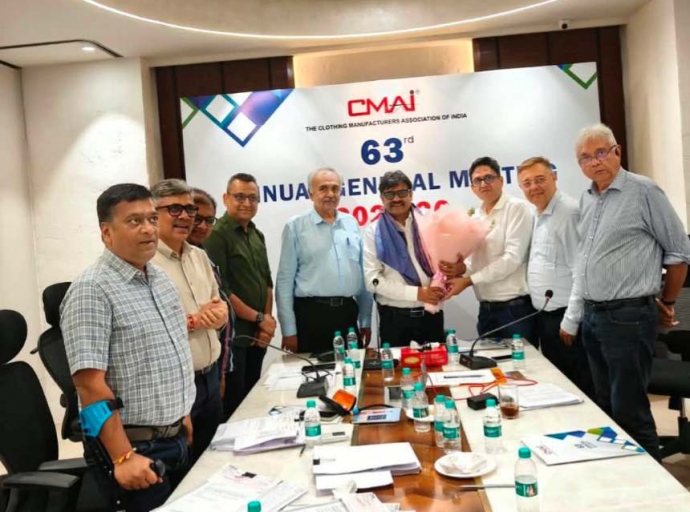
The Clothing Manufacturers Association of India (CMAI) welcomed the procedural changes announced by the Council but expressed disappointment over the higher tax on garments priced above Rs 2,500. As Santosh Katariya, President, CMAI says we welcome the procedural reforms that the GST Council has announced, in particular the limiting of powers of the GST officers for prosecution and eliminating the powers to arrest. However, the association argued the higher rate could undermine consumption, particularly during the festive season. It had sought an increase in the threshold to at least Rs 10,000, which it believed would have supported a wider range of garment purchases.

The concern extends beyond premium labels. Mid-market brands selling formalwear, occasion clothing and higher-value apparel could face a more difficult pricing situation, particularly if consumers become more sensitive to final ticket prices.

EASITEX

Faster refunds ease cash flow

The changes to inverted duty refunds could give a more immediate operational benefit for textile manufacturers and processors. Under the new framework, 90 per cent of eligible refund claims relating to zero-rated supplies and inverted duty structures are to be sanctioned provisionally through automated, risk-based processing. The acknowledgment window for refund claims has also been reduced from 15 days to 10 days.

For businesses operating across yarn processing, weaving, dyeing and finishing, faster refunds could reduce the capital trapped in the tax system. This is particularly relevant for smaller manufacturers, which often have limited access to low-cost working capital. “Automating 90 per cent of provisional inverted duty payouts ends quarterly cash flow freezes that have constrained medium textile mills for years,” said Rajesh Agarwal, MD, Veda Texstyles a knitwear exporter. Improved liquidity and reduced enforcement uncertainty could allow businesses to redirect attention towards production and capacity utilisation, he adds.

The actual gains, however, will depend on implementation, eligibility checks and the speed at which provisional refunds translate into cash received by businesses.

ChatBot

Compliance gets a reset

The Council’s procedural reforms also seek to reduce the compliance burden on manufacturers, traders and smaller suppliers. The changes include a Rs 5 crore threshold for prosecution, restrictions on transit enforcement and the removal of show-cause notices for demands of Rs 10,000 or less. The general residual penalty has been reduced from Rs 25,000 to Rs 10,000.

Restrictions on physical inspections, vehicle detention and cargo seizures could reduce disruptions for textile consignments moving through manufacturing and distribution centres such as Tiruppur, Surat and Ludhiana. For an industry dependent on tightly coordinated movement of raw materials, intermediate products and finished garments, fewer transit-related delays could improve delivery reliability and inventory planning.

The reforms could also improve predictability for smaller enterprises that lack dedicated tax and legal teams. Their effectiveness will ultimately depend on consistent enforcement across states and clear implementation guidelines.

Refer

E-commerce widens its reach

Simplified interstate registration provisions for eligible sellers operating through e-commerce marketplaces could make it easier for apparel businesses to reach consumers beyond their home markets without maintaining separate physical establishments in every destination state. The change could benefit smaller fashion labels, regional manufacturers and direct-to-consumer businesses seeking national reach without the cost of a large store network.

Separately, the introduction of the Reverse Charge Mechanism on purchases of plastic scrap and old tyres from unregistered persons strengthens tax traceability in recycling supply chains. This has implications for processors using recycled polymers to produce synthetic fibres and polyester yarn.

While the measure could improve documentation and compliance, its effect on the cost and viability of recycled textile inputs will depend on how the mechanism operates across the supply chain.

Platform

Retail expansion meets tax reality

Trent, the Tata Group retailer behind Zudio and Westside, indicate the scale of organised retail’s expansion ambitions. Its value-fashion model is built around accessible pricing, proprietary merchandise and a growing store network.

For retailers pursuing aggressive expansion, the revised GST structure creates both an opportunity and a constraint. The lower rate could support broader assortments within the mass-market price band, while the higher rate above Rs 2,500 may require more careful management of merchandise architecture and price ladders.

The broader impact will extend beyond retail counters. Manufacturers will need to align production plans with revised price points, while brands and suppliers reassess margins, sourcing costs and inventory commitments.

The GST changes are more than a tax adjustment. It could influence how India’s apparel industry balances affordability, premiumisation, formal retail expansion and manufacturing liquidity. The decisive factor will be whether the benefits of simplified compliance and faster refunds outweigh the pricing pressures created by the higher tax on garments above Rs 2,500.

SUSTAINABILITY

GST Reset: Apparel retail gets tax relief on mass market, pressure above Rs 2,500

India’s apparel majors are splitting their cash engines from growth bets

India’s apparel industry has entered a phase where corporate structure is being dictated by store-level economics. The vertical separation of Aditya Birla Fashion and Retail Limited (ABFRL) into two listed entities is a significant marker of this shift: mature, cash-generating lifestyle brands are being separated from businesses that require longer gestation, heavier working capital and sustained investment.

Under the restructuring, the Madura portfolio that includes Louis Philippe, Van Heusen, Allen Solly and Peter England moves into Aditya Birla Lifestyle Brands Limited (ABLBL). The residual ABFRL portfolio retains Pantaloons, digital-first incubator TMRW and premium and ethnic businesses including Sabyasachi, Shantnu & Nikhil and TCNS Clothing.

The logic extends beyond portfolio simplification. It is more about about capital allocation. When mature brands and capital-hungry businesses share a balance sheet, cash generated by established stores can end up funding businesses whose returns may take years to mature. Separating them allows investors and management teams to assess each business against its own growth requirements, capital intensity and return profile.

Store is the new balance sheet

The reasons become clearer at the individual store level. Consider a 1,200-sq. ft. branded menswear store on a high-street commercial location. With an average order value of Rs 3,000 and 35 daily transactions, the store generates Rs 31.5 lakh in monthly sales. At a 45 per cent cost of goods, it produces a 55 per cent gross margin. The critical calculation begins after merchandise margin.

Table: Retail Store Financial & Operational Model

Store details

Value

Basis

Store area

1,200 sq ft

High-street location

Initial capex

Rs 60 lakh

Fit-outs, deposits, inventory

Average order value

Rs 3,000

Customer basket

Daily transactions

35

Conversion velocity

Monthly revenue

Rs 31.5 lakh

35 × Rs 3,000 × 30

COGS

Rs 14.18 lakh

45% of sales

Gross margin

Rs 17.33 lakh

55%

Rent

Rs 5 lakh

Fixed occupancy

Staff & payroll

Rs 3.5 lakh

Store team

CAM, utilities & marketing

Rs 2.5 lakh

Operating overhead

Monthly store EBITDA

Rs 6.33 lakh

20.1% margin

Indicative capex payback

9.5 months

Capex / EBITDA

At this level of productivity, the store becomes a cash-generation vehicle. But the same mathematics also explains why retail expansion can destroy value when a location fails to generate sufficient sales density.

Fixed costs create the advantage

Rent, salaries, utilities and store-level marketing do not fall proportionately when customer traffic declines. Once these costs are committed, incremental sales become valuable. At the illustrative 55 per cent gross margin, additional revenue after the fixed-cost threshold contributes substantially to store EBITDA. A 10 per cent improvement in sales can therefore translate into a significantly higher percentage increase in operating profit.

The reverse is equally powerful. If footfall falls, the Rs 5 lakh monthly rent and Rs 3.5 lakh payroll remain. The retailer cannot simply reduce them in line with declining transactions. Operating advantage consequently works in both directions. This is why the next phase of Indian apparel expansion is likely to be less about counting stores and more about measuring sales per square foot, occupancy cost, inventory turns and cash payback.

Separating cash generators from growth bets

ABFRL’s restructuring can be viewed through precisely this lens. The Madura brands has developed a mature distribution pattern across company-owned stores, franchise networks, wholesale channels and licensing arrangements. Their relatively asset-light model allows established brands to generate cash while maintaining a comparatively disciplined capital requirement.

The businesses remaining with ABFRL have a different financial profile. Pantaloons operates large-format stores, typically requiring substantially more selling space and working capital. Ethnic and premium acquisitions such as TCNS and designer-led businesses require brand-building investment, while TMRW represents a digital incubation model in which capital is deployed ahead of scale and profitability. These businesses can create substantial long-term value, but their capital cycles are different from those of mature lifestyle brands.

That distinction matters for shareholders because a single balance sheet can obscure the economics of individual businesses. The demerger therefore creates two distinct capital-allocation propositions: one centred on established lifestyle brands and another focused on businesses with longer investment horizons.

Industry is moving to pure plays

ABFRL is not operating in isolation. Raymond’s separation of its lifestyle business into Raymond Lifestyle similarly created a more focused consumer platform distinct from its engineering and real-estate interests. The broader direction is clear: conglomerates are examining whether unrelated businesses should continue sharing capital, debt and management bandwidth.

At the other end of the spectrum, Trent’s Westside and Zudio have reinforced the importance of retail productivity. Private-label penetration, inventory velocity, store clustering and disciplined space utilisation have made sales density a central competitive metric. The implication for established apparel companies is significant. Store additions can no longer be justified simply by network ambition. Every new door has to show a credible path to breakeven, capital recovery and sustainable cash generation.

The new retail equation

India’s high-street and mall economics are also becoming less forgiving. Rising rents, minimum guarantees and competitive discounting are increasing the cost of an incorrect location decision. Retailers are therefore experimenting with smaller formats, revenue-sharing arrangements, cluster expansion and granular catchment analytics. The objective is not maximum physical presence, but maximum productivity from every square foot.

That makes the corporate demerger more than a financial restructuring exercise. It represents a deeper change in how India’s apparel industry thinks about growth.

The old model asked: How many stores can the company add? The new model asks: How quickly can each store recover capital, generate cash and fund the next store? As that question moves from the store manager’s dashboard to the boardroom, high-street mathematics is becoming corporate strategy.

India’s apparel majors are splitting their cash engines from growth bets

D2C apparel brands scale omnichannel presence in Rajasthan

FS Life’s flagship women’s brand, FableStreet, has launched its standalone store in Jaipur, establishing a physical retail touchpoint in Rajasthan’s expanding fashion market. This brick-and-mortar retail rollout accelerates the digital-first label’s conversion into an omnichannel power house. By integrating western formalwear, contemporary occasion lines, and modern accessories under a single roof, the brand captures localized offline spending among working professionals and modern urban shoppers across non-metro capitals.

Capitalizing on non-metro omnichannel acceleration

The Jaipur storefront allows the brand to capitalize on rising regional demand for structured western apparel tailored to Indian body proportions. Retail growth consultant Devendra Sharma noted, D2C fashion brands expanding into physical store networks achieve higher basket values and lower customer return rates by offering instant tactile verification, significantly strengthening unit-level profitability.

Operational efficiency and inventory velocity

Establishing localized inventory hubs in Tier II cities enhances supply chain agility. FS Life optimizes inventory fulfillment across digital marketplaces and physical outlets, driving sustained sales growth through centralized distribution.

FableStreet operates as a tech-enabled women's apparel brand under multi-brand parent entity FS Life. Specializing in tailored workwear, modern westernwear, and lifestyle apparel, the company serves urban professionals across top Indian cities. Founded in 2016, FableStreet continues scaling its omnichannel store footprint and product offerings.

D2C apparel brands scale omnichannel presence in Rajasthan

Apparel sector targets US$146 billion milestone as rural consumption rises

The domestic Indian apparel and textile manufacturing sector is entering an accelerated expansion phase, underpinned by deep-pocketed consumer demand originating far beyond metropolitan city limits. According to comprehensive market intelligence released by the Clothing Manufacturers Association of India  (CMAI) in partnership with 1Lattice, the country's apparel valuation is on track to rise from US$95.7 billion to US$146.3 billion by 2029, registering a steady 9 per cent CAGR. Industry analysts indicate, this upward trajectory highlights a structural shift away from urban-centric retail models. Rural consumption bases and Tier-III urban clusters now generate the lion's share of total retail volume, forcing textile mills and apparel brands to overhaul distribution architectures, implement value-driven pricing structures, and curate localized merchandise tailored to regional preferences.

MUCH MORE

Casualization and category shifts shape production

Shifting lifestyle preferences and rising workforce participation are simultaneously driving rapid product diversification across key demographic segments. Casualwear has established itself as the leading apparel category, capturing 31 per cent of total market consumption, closely followed by traditional ethnicwear and formal apparel. While menswear maintains the largest absolute market segment at US$38.5 billion, emerging categories such as kidswear and womenswear are projected to outpace legacy segments through aggressive growth rates of 9.4 per cent and 8.9 per cent CAGR respectively. Industry executives note, traditional brick-and-mortar storefronts continue to dominate retail distribution, commanding roughly 83 per cent of total sales value. Consequently, fashion enterprises are heavily investing in omnichannel fulfillment frameworks to effectively capture expanding consumer segments across diverse geographical tiers without sacrificing operating margins.

VIEW

Championing domestic policy formulation

Established over six decades ago, the Clothing Manufacturers Association of India represents more than 7,000 corporate members and serves a vast network exceeding 50,000 retailers. The organization champions domestic policy formulation, sustainability integration, and international trade representation for the nation's textile and apparel supply chain.

SUSTAINABILITY

Apparel sector targets US$146 billion milestone as rural consumption rises

Non-metro consumer demand drives record digital apparel spending at fashion festival

India’s festive retail season opened with unprecedented transaction volumes as Myntra’s flagship Big Fashion Festival registered a fourfold spike over baseline business activity within its initial 24 hours. Regional consumer markets spearheaded this upward momentum, with buyers across Tier-II and Tier-III urban centers accounting for more than 50 per cent of opening-day order placements. Eastern domestic territories demonstrated marked buying acceleration, recording a sevenfold expansion in volume driven by pre-festival wardrobe refreshes.

Category upgrades and logistics execution fuel scalability

Product demand centered on ethnic ensembles, sports footwear, and premium cosmetics. Platform telemetry recorded throughput rates of 800 T-shirts and 500 footwear pairs ordered per minute during initial peak shopping hours. Express delivery logistics and expanded fulfillment networks addressed surging throughput, allowing e-commerce operators to maintain service levels across regional pin codes.

Tier-II and Tier-III shoppers are no longer just looking for value bargains; they are actively seeking premium fashion labels and modern styles. This structural expansion in regional buying power is reshaping overall digital retail distribution, stated an e-commerce retail analyst.

Navigating festive inventory allocation and managing peak-load fulfillment bottlenecks remain critical operational challenges for logistics partners. However, sustained non-metro demand provides clear opportunities for fashion platforms to scale premium brand distribution across India’s growing regional consumer base.

E-commerce fashion platform for Indian retail market

Myntra is India's leading digital fashion and lifestyle destination, servicing thousands of domestic and global apparel, beauty, and footwear brands. Operating across pan-India pin codes, the Flipkart-owned entity targets rapid expansion in regional markets while maintaining strong operational growth in modern e-commerce fashion retail.

Non-metro consumer demand drives record digital apparel spending at fashion festival

Arvind Fashions strengthens casualwear portfolio with equity infusion into Flying Machine

Arvind Fashions has reinforced its core apparel operations through its wholly-owned material subsidiary, Arvind Lifestyle Brands, which injected approximately 50 crore rupees into Arvind Youth Brands (AYBPL). AYBPL manages the wholesale and retail distribution of Flying Machine, recognized as India's premier indigenous denim and youth lifestyle brand. Executed via a subscription of over 1.82 million equity shares priced at Rs 27.44 each, the financial restructuring elevates the subsidiary's shareholding from 60.40 per cent to 65.91 per cent. Corporate filings indicate, while direct equity distribution has adjusted, the broader Arvind Group retains absolute, uncompromised control with a cumulative 100 per cent ownership structure. This strategic capital deployment arrives as domestic casualwear brands navigate intense competition within Tier-II and Tier-III urban markets.

Revitalizing growth channels and navigating market demands

The latest capital injection is engineered to provide essential liquidity and strategic momentum for Flying Machine as the label recalibrates its distribution footprint across digital marketplaces and brick-and-mortar storefronts. Recent financial disclosures reveal that AYBPL posted a turnover of Rs 404.75 crore for FY25-26, reflecting a slight adjustment from previous years. Industry analysts observe, legacy domestic denim labels must continually optimize supply chain agility and introduce trend-forward fabric finishes to capture younger consumer demographics. Securing robust internal funding allows heritage casualwear brands to aggressively scale modern retail formats and accelerate inventory turnaround, notes Rameshwar Singh, Retail Sector Analyst, Apex Market Research. By streamlining capital allocation, the parent group aims to insulate the brand against broader macroeconomic retail headwinds and reinvigorate top-line growth.

Focusing on omnichannel expansion and product innovation

Arvind Youth Brands operates wholesale and retail channels for Flying Machine, specializing in youth-centric denim apparel, casual wear, and fashion accessories across India. Targeting expansive metropolitan and emerging suburban markets, the enterprise focuses on aggressive omnichannel growth and product innovation. Backed by the multi-billion-dollar Arvind conglomerate, the brand leverages decades of textile manufacturing expertise since its initial market introduction in the late nineteen-eighties.

Arvind Fashions strengthens casualwear portfolio with equity infusion into Flying Machine

Iris Clothings expands Middle East footprint with Doreme showcase at Saudi Expo

Kolkata-based apparel manufacturer Iris Clothings is actively accelerating its global expansion strategy by showcasing its flagship kidswear brand, Doreme, at the Saudi Fashion and Tex Expo. The strategic trade participation is designed to establish direct commercial channels with regional distributors, department store buyers, and franchise partners across the Middle East and North Africa.  Santosh Ladha, Managing Director, Iris Clothings Limited, notes, international trade platforms provide vital exposure for showcasing quality children's apparel to emerging consumer demographics seeking durable, comfortable everyday wear.

Scaling manufacturing capacity and export margins

The export push aligns with the company's broader operational objective to increase overseas revenue contributions amid shifting global sourcing patterns. Operating through integrated in-house manufacturing facilities in West Bengal, the company maintains rigorous quality control standards to meet stringent international safety and fabric compliance regulations. Industry data highlights that the Middle Eastern children's apparel market is experiencing steady expansion, driven by rising disposable incomes and expanding organized retail infrastructure, presenting lucrative margin opportunities for Indian manufacturers equipped with scalable production frameworks.

Focusing on advanced in-house production and scalable distribution

Iris Clothings is an Indian apparel manufacturing and retail company specializing in children's wear under the Doreme brand. Operating across domestic and international wholesale markets, the firm prioritizes advanced in-house production and scalable distribution networks, building upon its establishment in 2011 to emerge as a prominent kidswear manufacturer.

Iris Clothings expands Middle East footprint with Doreme showcase at Saudi Expo

Workforce expansion drives US$ 277 billion Indian apparel boom

India’s domestic textile and apparel (T&A) sector reached US$ 277.01 billion, with women’s apparel emerging as the primary growth catalyst. The acceleration stems from rising formal employment among women, which expanded corporate and structured casualwear consumption across non-metro hubs. Apparel manufacturers are reallocating capital expenditure to scale specialized cutting and stitching units, moving away from reliance on seasonal ethnic cycles to capture year-round baseline demand.

Operational efficiency challenges regional supply chains

The structural shift toward daily workwear requires tighter lead times and agile inventory turnover, notes Rajesh Kumar, Senior Vice President - Textile Operations, Apex Retail. Supply chain friction remains an obstacle as volatile raw material costs impact operating margins. However, government incentives under PM MITRA parks and expanded D2C logistics networks provide cost mitigations, enabling regional brands to establish direct supply links with Tier-2 and Tier-3 urban centers.

Focusing on automated processing and digital supply chain integration

The domestic apparel industry encompasses integrated spinning mills, modern garment manufacturing units, and organized retail networks across urban and Tier-II corridors. Key categories include casualwear, western formalwear, activewear, and traditional textiles. Capital strategies focus on automated processing plants and digital supply chain integration. The sector demonstrates stable double-digit operational growth, built on a centuries-old textile manufacturing heritage.

Workforce expansion drives US$ 277 billion Indian apparel boom

Latest Publications

Image

Join Our Group

Join Our Group