All Stories

Direct-from-cluster supply reshapes India’s heritage Ajrakh apparel trade

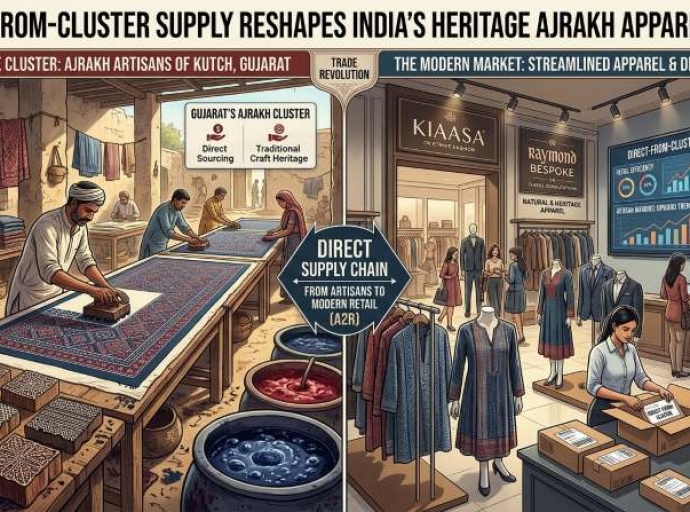
As Indian apparel retailers move upmarket toward traceable, craft-led collections, Kutch Arts is streamlining wholesale sourcing by linking Gujarat’s block-printing workshops directly with national buyers. Operating out of Madhapar in Bhuj, the manufacturer has rolled out a pan-India B2B distribution network supplying authentic Ajrakh garments to boutiques, multi-brand stores, and resellers. The expansion taps into a domestic handicrafts economy projected to reach $5.16 billion in 2026, where hand-finished provenance commands stronger retail margins than mass-produced imitations.

Eliminating intermediaries to protect craft margins

Multi-tiered trader networks have historically inflated wholesale prices while compressing artisan earnings and delaying seasonal replenishment. By integrating fabric selection, traditional resist block-printing, and garment finishing under one roof, Kutch Arts provides retail partners with standardized sizing and reliable bulk fulfillment. Direct-from-cluster B2B supply solves retail’s biggest heritage sourcing bottleneck - guaranteeing Geographical Indication provenance alongside consistent batch quality, notes Meera Deshmukh, Craft Retail Analyst, Deccan Textile Advisory.

Scaling authentic craft against screen-printed imitations

While low-cost, machine-printed replicas continue to challenge handloom clusters on price, rising consumer scrutiny and government initiatives like the Digital Handloom Atlas are accelerating B2B demand for verified craft. For regional boutiques across metropolitan and tier-two cities, direct factory procurement lowers inventory acquisition costs while preserving authentic Kutch artistry on the retail floor.

Kutch Arts’ B2B heritage apparel network

Based in Bhuj, Gujarat, Kutch Arts manufactures and wholesales authentic Ajrakh block-printed garments for boutiques and apparel retailers nationwide. Rooted in Kutch’s centuries-old resist-dyeing tradition, the enterprise is expanding its pan-India B2B distribution network to capture growing domestic demand for traceable, heritage-led fashion collections.

Direct-from-cluster supply reshapes India’s heritage Ajrakh apparel trade

Cross-border demand lifts Kiaasa Retail as Rs 45 crore export deal opens overseas channel

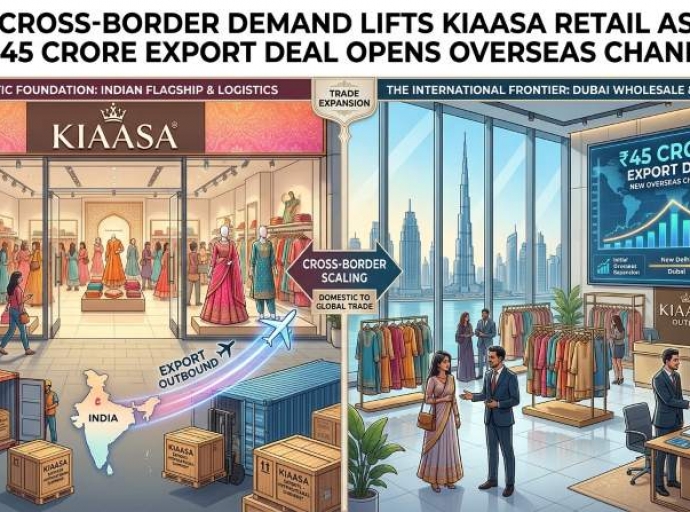
Indian ethnic wear labels are increasingly tapping Middle Eastern retail networks to diversify revenue beyond domestic high streets. Ghaziabad-based Kiaasa Retail has secured an export contract valued at roughly ₹45 crore ($4.85 million) from Dubai-based Gawgee Brothers, establishing an international wholesale vertical alongside its brick-and-mortar and e-commerce operations. The one-year supply mandate covers women’s dresses, two-piece kurta sets, and salwar-kurta-dupatta ensembles, bringing Kiaasa’s disclosed order inflow for the October–December 2026 quarter to Rs 90 crore.

Leveraging export pedigree for overseas execution

Entering global wholesale exposes domestic value-fashion operators to strict packaging compliance, working-capital cycles, and quality benchmarks. Under the Dubai contract, Kiaasa must fulfill strict single-SKU carton rules and individual polybag packing across multi-piece sets. Having spent over two and a half decades building international export businesses through Rugs In Style, we understand what global buyers demand in terms of quality, consistency, and timely delivery, states Om Prakash, Chairman and Managing Director, Kiaasa Retail.

Broadening revenue mix beyond domestic storefronts

Following a 23.9 per cent net profit increase in FY26, adding Gulf distribution reduces Kiaasa’s reliance on seasonal Indian retail footfall. For mid-sized ethnic wear brands, Middle Eastern diaspora and tourist hubs offer a scalable testing ground for higher-volume B2B exports.

Building international export channels

Founded in 2018 and acquired in 2021 by promoters Om Prakash and Amit Chauhan, Kiaasa Retail retails women’s ethnic apparel and accessories across over 100 Indian stores and digital platforms. Listed on the BSE SME exchange in March 2026, the company is scaling toward 250 stores while building international export channels.

Cross-border demand lifts Kiaasa Retail as Rs 45 crore export deal opens overseas channel

Omnichannel scaling propels demi-fine jewelry xhain past 130 outlets

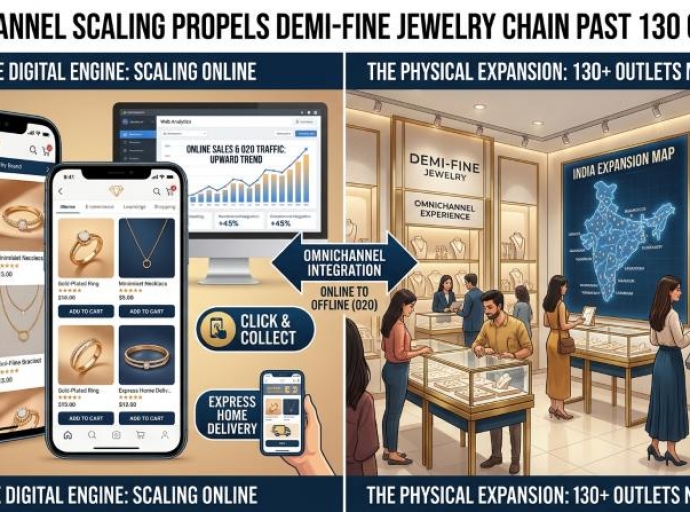
Jewelry retailer Palmonas has extended its physical footprint into Jammu and Kashmir with a new outlet in Channi Himat, lifting its national store count past 130 locations. Following a rapid acceleration from 75 outlets in mid-2026, the rollout reflects a broader fashion-retail trend where digital-native accessory brands capture regional apparel shoppers through neighbourhood storefronts.

Unit economics and category positioning drive sector shift

Competing against traditional family-owned jewlers and fast-fashion imitations, Palmonas occupies the emerging demi-fine segment - offering 9KT gold, fine silver, and plated everyday pieces.While digital channels and quick commerce generate roughly 73 percent of sales, the company targets lifting offline revenue share toward 35 to 40 percent.Like-for-like store sales rose over 30 percent in FY26, supported by an approximate ₹200 crore revenue base and a long-term goal of 200 outlets.Every physical outlet operates profitably on strong local unit economics, notes Shraddha Kapoor, Co-founder regarding the company's disciplined store selection.

Capital backing and regional clustering strategy

Maintaining supply-chain quality amid steep scaling and rising customer acquisition costs remains an operational test. Following its eastern India cluster model in Kolkata and Patna, Palmonas leverages high-street visibility to convert online browsers into repeat apparel-accessory buyers.

Targeting over 150 stores by FY27

Founded in 2022 by Pallavi Mohadikar and Dr. Amol Patwari, alongside co-founder Shraddha Kapoor, Pune-headquartered Palmonas retails demi-fine, 9KT gold, and fine silver jewelry across India.Backed by Vertex Ventures and Xponentia Capital, the brand scaled from Rs 40 crore in FY25 revenue to roughly Rs 200 crore in FY26 while targeting 150-plus stores by FY27.

Omnichannel scaling propels demi-fine jewelry xhain past 130 outlets

Peter England targets Rs 60,000-crore wedding menswear market with designer-led capsule

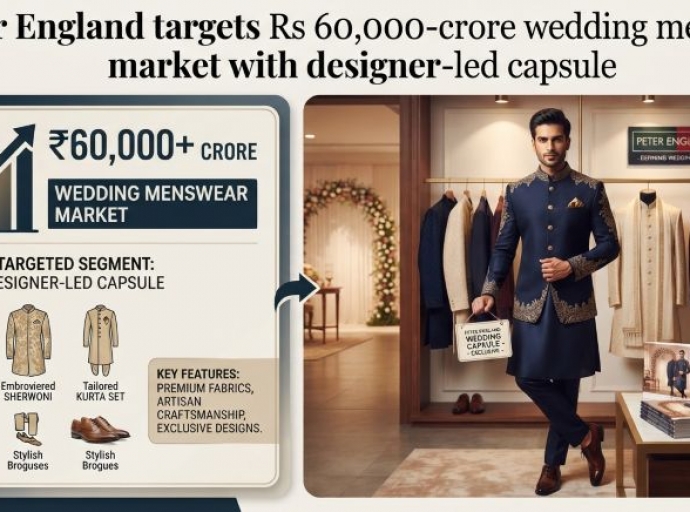
Indian menswear retailers are intensifying their focus on ceremonial apparel as multi-day weddings reshape male wardrobe spending. Industry estimates value India’s wedding menswear segment at Rs 50,000 crore to Rs 60,000 crore in FY26, accounting for nearly 30 per cent of the broader celebration wear market as grooms and guests increasingly purchase distinct outfits for individual rituals rather than relying on single formal ensembles.


Translating cinema aesthetics into mass retail

Capitalizing on this demand, Peter England has elevated filmmaker Karan Johar from brand ambassador to co-creator for Season 3 of The Bollywood Wedding Collection. Unlike bespoke luxury labels that price out mass consumers, the capsule standardizes red-carpet aesthetics—spanning pastel engagement blazers, velvet cocktail tuxedos, and tailored three-piece wedding suits—into accessible price bands across physical stores and digital storefronts. Bollywood has always shaped the way India celebrates and dresses for weddings, says Anand Aiyer, Chief Business Officer, Peter England. This collaboration brings the latest trends to the modern Indian man’s wardrobe to make every wedding moment memorable.


Navigating margin pressures and regional demand

While rising input costs and competition from regional boutiques remain persistent industry challenges, structured occasion-wear capsules allow organized retailers to capture higher average order values during the peak November–December wedding window. By leveraging its extensive distribution network, the brand is positioned to convert aspiration-driven shoppers in tier-two and tier-three cities into repeat formalwear buyers.


Legacy tailoring meets modern omni-channel scale

Originally established in 1889 and now operating under Aditya Birla Lifestyle Brands (ABLBL), Peter England retails formal, casual, denim, and ceremonial menswear across metros and emerging towns. Supported by parent ABLBL’s 3,434-store footprint and 11 per cent Y-o-Y Q2 FY27 revenue growth to Rs 2,266 crore, the brand continues expanding its omni-channel reach and youth-focused capsules.

Peter England targets Rs 60,000-crore wedding menswear market with designer-led capsule

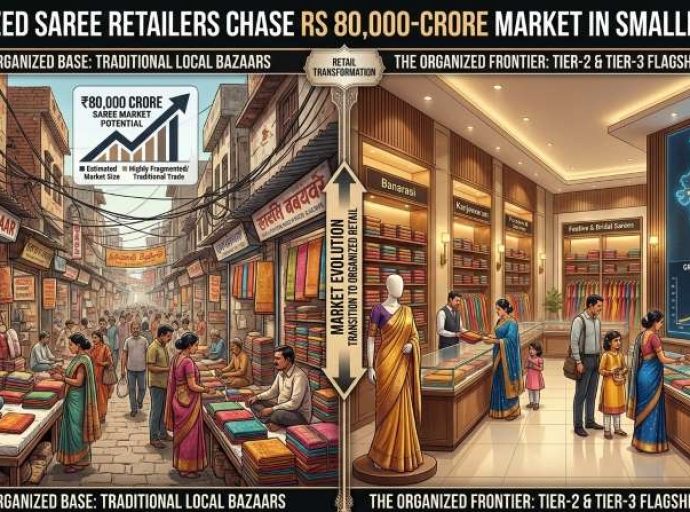
Organized saree retailers chase Rs 80,000 - crore market in smaller cities

Apparel chains are redirecting capital toward Tier II and Tier III towns as regional spending outstrips metropolitan growth. Industry data shows, Tier III fashion spending rose by 15.6 per cent during Diwali 2026- more than double the 6.9 per cent recorded in metros - with East India expanding at 13.9 per cent. At the Kolkata Retail Summit 2026 on November 26, executives outlined how organised players are capturing India’s Rs 80,000-crore saree category, which remains over 90 per cent unorganised. The saree isn't losing young customers; it is being reinvented for them, says Chetan Thakwani, CEO, Legacy of Bhojraj. Younger women are choosing it for work, for festivals and for the moments they share online, but they want lighter fabrics, easier drapes and designs that keep pace with trends.

Scaling supply chains without margin erosion

Rapid trend cycles and high inventory fragmentation complicate regional expansion. To preserve healthy margins while shortening replenishment timelines, Kolkata-based Indian Silk House Agencies links a 35,000-sq-ft central warehouse to over 60 weaving clusters and 15,000 artisans. Using a franchise-owned, company-operated model alongside store-led video commerce, the retailer is opening outlets every seven to ten days across underserved markets. Such supply-chain discipline enables regional brands to formalize fragmented handloom trade while defending profitability.

Heritage craft meets omnichannel acale

Founded from a single Kolkata store in 1971, Indian Silk House Agencies retails handwoven silk and cotton sarees across eastern and national markets. Targeting 500 stores by 2030 and ₹1,000 crore in revenue, the firm maintains 15 to 20 per cent EBITDA margins while entering the UK and US diaspora markets.


Organized saree retailers chase Rs 80,000 - crore market in smaller cities

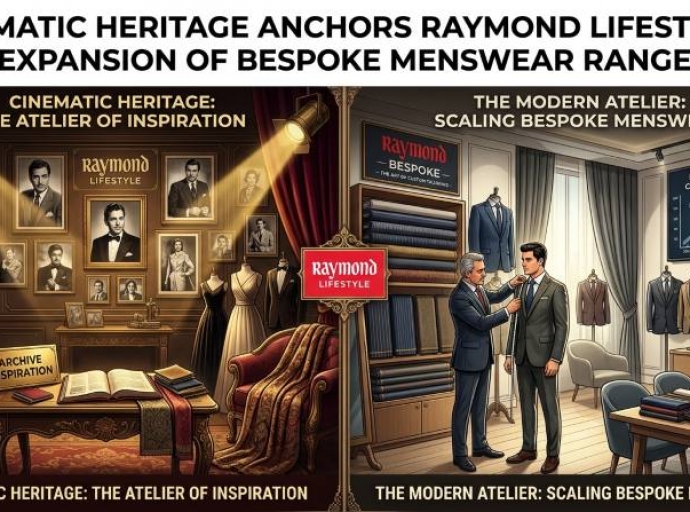
Cinematic heritage anchors Raymond Lifestyle’s expansion of bespoke menswear range

Luxury menswear labels in India are increasingly tapping cultural nostalgia to differentiate custom tailoring amid rising competition in occasion wear. Raymond Lifestyle Limited has named actor Jaideep Ahlawat as the 'Friend of the Brand' for its bespoke luxury line, Raymond Chairman’s Collection. Unveiled at the label's flagship store in Bandra, Mumbai, on November 25, 2026, the campaign translates classic Indian cinema aesthetics from the 1960s, 1970s, and 1980s into modern tailored menswear.

Reinterpreting retro silhouettes for Modern Buyers

Through three curated looks inspired by those three decades, the initiative aims to capture wedding and festive shoppers seeking personalized, high-margin suiting over mass-produced formalwear. The brand aims to reinterpret the iconic style influences of Indian cinema through a contemporary lens, celebrating the intersection of culture, fashion and bespoke luxury, says Satyaki Ghosh, Whole-Time Director and CEO, Raymond Lifestyle.

Balancing marketing spend with margin discipline

While celebrity-led storytelling strengthens brand equity, luxury retail operators face rising customer acquisition costs and input inflation. Raymond Lifestyle posted a record quarterly total income of Rs 2,125 crore in Q2 FY27, up 14 per cent Y-o-Y, though higher marketing investments trimmed EBITDA margins to 12.7 per cent. By anchoring bespoke tailoring in pop-culture heritage, Raymond seeks to convert festive footfall into repeat custom orders across its flagship network.

Demerged and listed in 2024, Raymond Lifestyle Limited retails branded textiles, formal menswear, and ethnic apparel through labels including Raymond, Park Avenue, ColorPlus, and Ethnix across more than 1,620 stores in India. Building on Rs 7,034 crore in FY26 income, the company is prioritizing premiumization, casualwear expansion, and disciplined store rationalization.

Cinematic heritage anchors Raymond Lifestyle’s expansion of bespoke menswear range

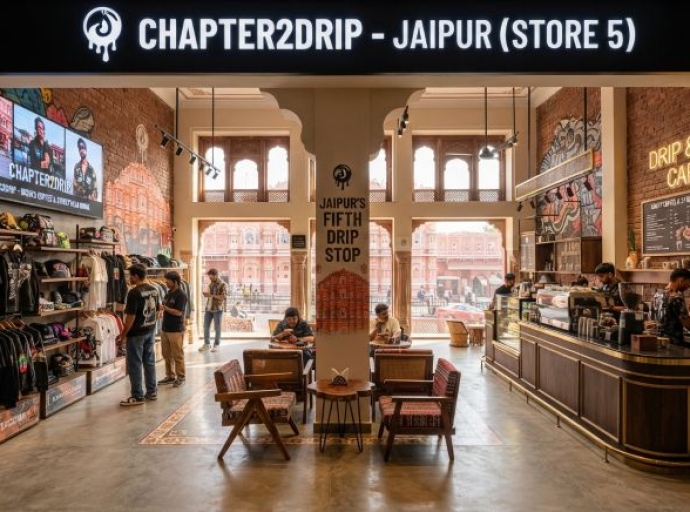
Chapter2Drip integrates in-store café at fifth store in Jaipur

Streetwear labels expanding into regional malls are pairing apparel racks with food-and-beverage counters to lengthen dwell time and lift basket size. Chapter2Drip opened its fifth store at Pacific Mall in Jaipur on November 24, 2026, integrating an in-store café operated by Tan Coffee.

Hospitality integration targets regional footfall and retention

Positioned roughly 30 per cent above fast fashion and 30 per cent below luxury tiers, the brand targets mass-premium shoppers while expanding beyond online-led sales, which currently generate about 70 per cent of revenue toward a projected 50-50 split over the next 18 months. Management notes non-metro buyers often show stronger repeat loyalty than metro shoppers, making Jaipur a testbed for experiential retail. The brand does not aim to just expand at a speed where operation breaks, says Showik Chakravorty, Co-founder, outlining a measured rollout across cities such as Gurugram, Bengaluru, Surat, and Indore.

Supply chain discipline meets store execution

Scaling physical outlets strains inventory planning, café staffing, and margin discipline without heavy discounting. Across India’s apparel sector, pairing casualwear with coffee or lifestyle corners helps brick-and-mortar formats defend traffic against digital rivals while building community loyalty.

Incorporated in December 2023 under Rherise Collective Private Limited and founded by Rhea Chakraborty and Showik Chakraborty, Chapter2Drip sells mass-premium everyday streetwear for men, women, and children across India. Backed by $3.32 million in disclosed funding, the label is scaling offline stores toward a ₹100 crore revenue target.

Chapter2Drip integrates in-store café at fifth store in Jaipur

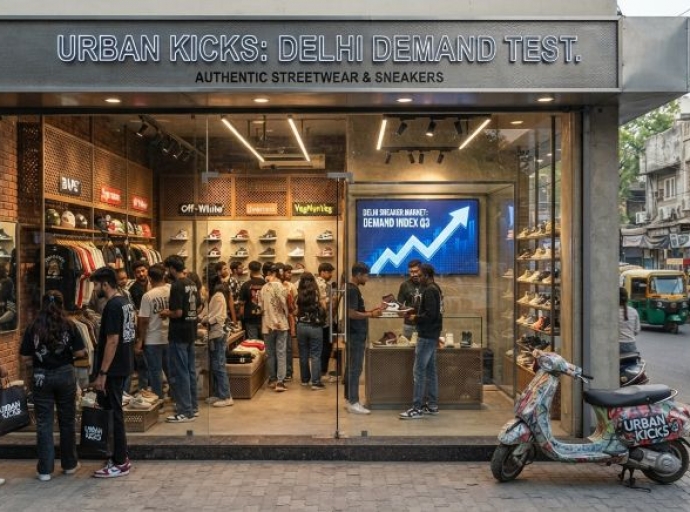
Streetwear multi-brand retail tests Delhi demand as sneaker market expands

Singapore-based Limited Edt has opened its fourth Indian store at DLF Avenue in Saket, New Delhi, bringing curated sneakers and streetwear into one of the capital’s premier retail hubs. The move taps into India’s sneaker market, estimated at $4.21 billion in 2026 and projected to reach $6.53 billion by 2034 at a 5.65 per cent CAGR, with North India accounting for roughly 34% of demand. Homegrown direct-to-consumer challengers such as Comet and Gully Labs are accelerating drop-driven culture, raising the bar for product exclusivity. Physical stores let collectors inspect materials and build community trust that digital channels alone cannot replicate, says Rajiv Nair, Head-Retail Operations, Limited Edt India.

Mall rents and supply chain friction

Prime mall leases, import duties on performance footwear, and shifting athleisure preferences test unit economics for specialty retailers. Low-top silhouettes hold roughly 43% of India’s sneaker segment, while multi-brand formats face rising competition from single-brand flagships and quick-commerce fashion platforms. Still, physical retail conversion remains vital as shoppers pair streetwear apparel with everyday sneakers across office and leisure settings.

Curating limited edition sneakers and streetwear apparel

Operating through NM Sports Fashion Concepts in India, Limited Edt curates limited-edition sneakers, streetwear apparel, and accessories across North Indian retail hubs and online channels. Originating in Singapore as a specialist sneaker retailer, the company expands selectively in India while navigating competitive pricing and steady urban retail demand.

Streetwear multi-brand retail tests Delhi demand as sneaker market expands

Non-metro apparel demand reshapes textile inventory and production planning

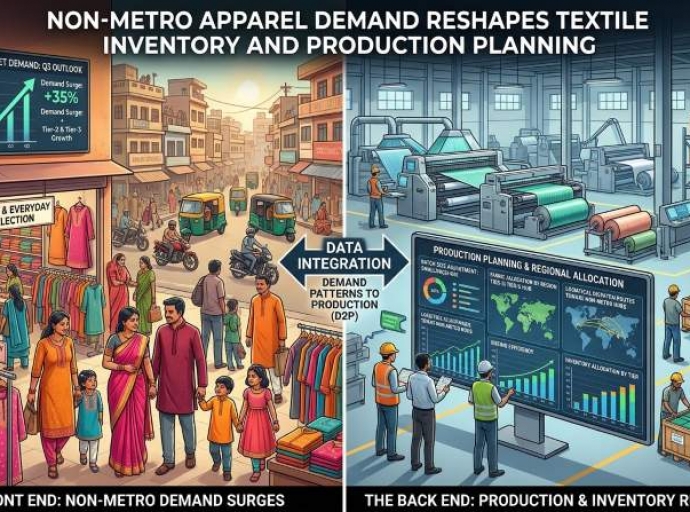
Accelerating garment purchases across smaller Indian towns are forcing domestic textile mills and apparel manufacturers to recalibrate seasonal production runs. Data from the November 2026 Diwali Special RAI–Innoviti Sanket report indicates, Fashion & Lifestyle retail posted 9.2 per cent Y-o-Y like-for-like growth across the 36-day festive period from October 11 to November 15, outpacing August’s 8.5 per cent and September’s 7.7 per cent expansion. Tier-III cities drove this trajectory with 15.6 per cent apparel growth, followed by 12.5 per cent in Tier 2 towns, compared with 6.9 per cent in metro centers.

Value-segment fabric mix and payment friction test margin discipline

For spinning and weaving units supplying domestic retail chains, rising demand from North India (15.7 per cent) and East India (13.9 per cent)- which had already registered a 28.3 per cent pre-Navratri spike - requires tighter inventory allocation toward affordable ethnicwear, synthetic blends, and daily basics. Managing working capital amid volatile yarn costs while avoiding post-festival markdowns remains a primary operational hurdle. Pairing real-time transaction analytics with regional assortment planning lets apparel brands protect margins rather than treating non-metro markets uniformly, observes Rajeev Agrawal, CEO, Innoviti Technologies. Notably, digital checkout infrastructure also supported conversion, as UPI-linked fashion payments grew 14.2 per cent against 6.4 per cent for cards.

RAI–Innoviti Sanket Retail Intelligence Initiative

Launched jointly by the Retailers Association of India (RAI) and payment-technology firm Innoviti Technologies, Sanket benchmarks same-store consumer spending across 2,800 towns and 10,000 PIN codes. Processing over ₹80,000 crore annually across 20,000 merchants, Innoviti—backed by Bessemer Venture Partners and Catamaran Ventures—provides apparel manufacturers and retailers with granular category and regional demand telemetry

Non-metro apparel demand reshapes textile inventory and production planning

Apparel retailers overhaul frontline hiring to curb attrition and tap underrepresented talent

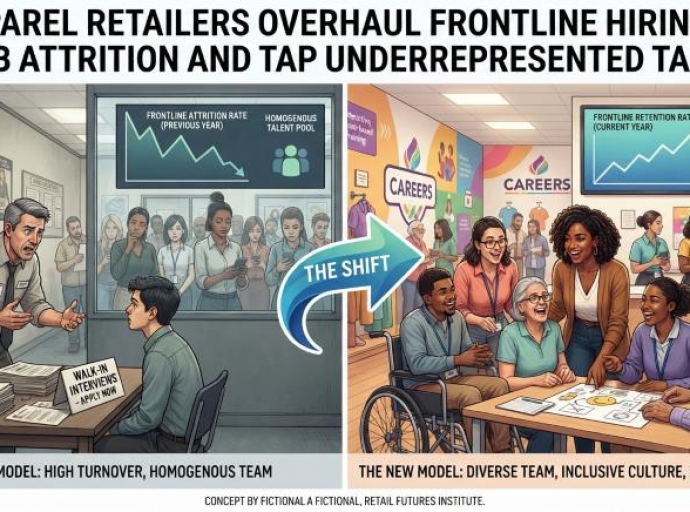
Indian fashion and lifestyle retailers are restructuring store-level human resource operations to address persistent frontline staff shortages and expand workforce diversity. At the EKAM 2026 All Inclusive Summit held in Mumbai on November 24, executives from Pantaloons, OWND, Shoppers Stop, and IKEA India examined how store infrastructure and managerial accountability directly govern associate retention.

Bridging the gap between policy and store operations

Although corporate diversity hiring across India increased by 21 per cent in 2026 - with persons with disabilities (PwDs) reaching 12 per cent of diversity recruitment - organized private-sector PwD representation still trails at under 1 per cent overall. Retail operators face steep post-onboarding turnover when physical workspaces, digital point-of-sale tools, and shift schedules lack reasonable accommodations. Diversity gets people through the door. Inclusion decides whether they stay. And in retail, that isn't decided in a policy manual. It's decided on the shop floor, by a manager, in small moments, says Divya Seth, Head HR, Pantaloons & OWND, Aditya Birla Fashion and Retail Ltd. Sameer Iyer, Chief of Livelihood Operations at TRRAIN, added that livelihoods are sustained only when both candidates and workplaces adapt to one another.

Commercial impact on fashion and lifestyle chains

Chains like Shoppers Stop and Reliance that partner with TRRAIN’s Project Pankh report that trained PwD associates consistently meet or exceed customer-service benchmarks, turning inclusive store management into a measurable commercial advantage.

TRRAIN

Scaling inclusive retail livelihoods across India

Jointly organized by the Retailers Association of India (RAI) and the Trust for Retailers and Retail Associates of India (TRRAIN), the Ekam summit unites apparel, specialty, and digital retailers nationwide. Founded in 2011 by BS Nagesh, Trrain expands vocational skilling, job placements, and long-term career pathways for PwDs and marginalized women.

Apparel retailers overhaul frontline hiring to curb attrition and tap underrepresented talent

Mokobara bets on maximalist handbags to diversify beyond luggage

Bengaluru-based travel gear maker Mokobara has introduced Goose Emergency, a women-focused fashion accessories label led by its eight-piece Ponzo Vol. 1 debut. Rather than replicating Mokobara’s minimalist travel aesthetic, the lineup centers on expressive finishes, bold hues, and tactile details engineered for everyday carry. Navin Parwal, Founder, notes, the concept grew out of an experimental social account called Mokobaruu, where audience traction around a goose motif prompted the team to build a distinct identity around ‘fashion with bite’ and ‘kindness with teeth.’

Margin economics and retail execution

The expansion arrives as India's handbags market records roughly 8 per cent Y-o-Y growth and projects an 8.8 per cent CAGR through 2030, creating clear demand for differentiated women's accessories. Following a Series C round in September 2026 that valued Mokobara near Rs 1,930 crore after FY25 operating revenue reached Rs 230.15 crore against a Rs 10.18 crore net loss, adding higher-margin fashion accessories offers a path to broaden unit economics. Still, fashion retail brings sharp execution hurdles: procurement cost volatility, counterfeit pressure, and online return rates across non-metro cities. For established D2C operators, pairing digital storytelling with disciplined omnichannel retail will determine whether Goose Emergency scales sustainably across Indian fashion.

Supporting expansion into women’s fashion

Founded in 2019 in Bengaluru, Mokobara designs luggage, backpacks, and travel accessories sold across online channels, 14-plus Indian stores, and a Dubai outlet. Backing from Sauce VC, Peak XV Partners, and Saama Capital supports category expansion into women's fashion as revenue scales past ₹230 crore despite ongoing net losses.

Mokobara bets on maximalist handbags to diversify beyond luggage

Latest Publications

Image

Join Our Group

Join Our Group