
India’s GI Goldmine: Can heritage textiles power a $100 bn export leap?
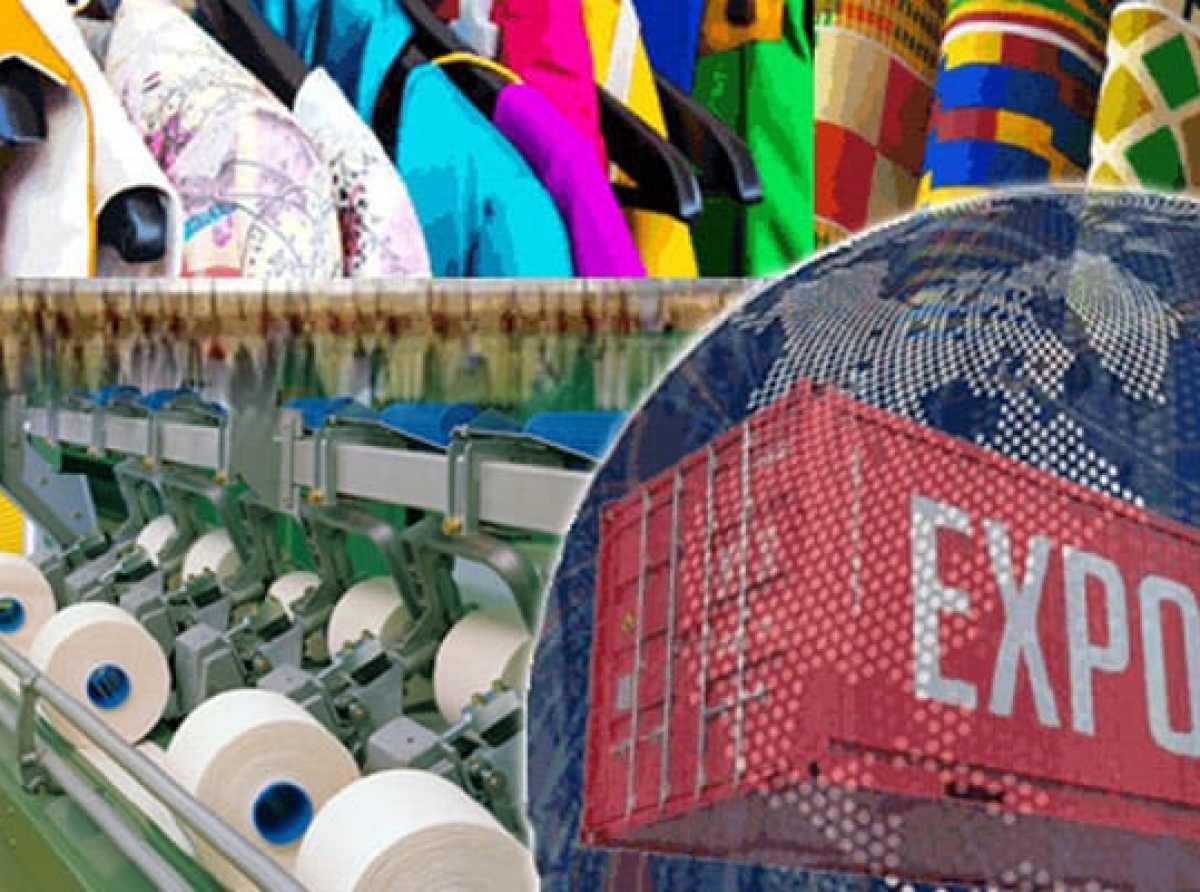
India’s textile sector is attempting something far more consequential than an export growth. It is trying to convert cultural capital into economic capital. The Ministry of Textiles’ ‘Vision 2030’, which targets $100 billion in exports, is often framed as a scale ambition. In reality, it is a redesign of how Indian textiles are positioned in global trade. For decades, India’s handlooms and handicrafts were treated as repositories of cultural identity rather than commercial assets. The country’s more than 180 Geographical Indication (GI)-tagged products, from Banarasi silk to Kanchipuram weaves, carried prestige but lacked the institutional machinery to function as globally scalable brands. That is now changing.
The shift underway is to treat these products not merely as artisanal outputs but as premium intellectual property. In a global fashion economy increasingly moving toward traceability, provenance and slow luxury, this could prove timely. What France did with Champagne and Italy with Parma ham, India is seeking to do with heritage textiles, turn origin into pricing power. That ambition is reflected in the export architecture itself.
|
Segment |
Export value (est.)FY 2025-26 |
Growth rate (Y-o-Y) |
Target export (2030) |
|
Readymade Garments |
Rs 1.39 Trillion |
4.20% |
Rs 3.50 Trillion |
|
Handloom & Handicrafts |
Rs 16,400 Crore |
6.10% |
Rs 45,000 Crore |
|
Cotton Yarn & Fabrics |
Rs 92,000 Crore |
2.80% |
Rs 1.80 Trillion |
The table reveals an important policy insight. While readymade garments remain the volume engine, handloom and handicrafts are posting the strongest growth, albeit from a smaller base. That matters because this segment is less about scale and more about value density. A sari or artisanal textile can carry margins and storytelling premiums unavailable to commodity exports. The target of nearly tripling handloom and handicraft exports by 2030 signals that policymakers increasingly view craft as an export multiplier rather than a niche social sector.
Heritage needs industrial discipline
Yet, cultural distinctiveness alone does not build export competitiveness. The longstanding problem has been reliability. Global buyers have often admired Indian craft while hesitating to source at scale because of fragmented production, inconsistent quality and weak delivery assurance. This is where policy has moved beyond preservation and into industrial engineering.
PM MITRA parks represent a notable break from the traditional cluster-development approach. Instead of treating artisan communities as isolated rural ecosystems, the model seeks to integrate them into industrial-grade infrastructure, common processing facilities, zero-liquid discharge dyeing, warehousing and logistics. The recent allocation of 190 acres to 23 investors at the Tamil Nadu PM MITRA park, backed by Rs 2,192 crore in commitments, signals this shift from subsidy-led support to investment-led ecosystem building.
Equally significant is the integration of the Samarth skilling programme. Training over 1.1 lakh beneficiaries is not merely about employment generation; it addresses a core export issue: defect-free repeatability. For global luxury buyers, craftsmanship is valued only when consistency accompanies artistry. That is the missing business layer India has long lacked.
The Banarasi template
The pilot involving 500 Banarasi weavers offers perhaps the clearest proof of concept. A 12 per cent rejection rate was brought down to 2 per cent through centralized finishing and digital inventory systems, while unit realization rose 22 per cent. The economics here are more significant than the anecdote. It shows how heritage does not lose authenticity when supported by technology; it gains commercial viability. This is an important lesson because debates around artisanal modernization often fall into a false binary of tradition versus industrialization. The Banarasi example suggests the future lies in combining both. For luxury buyers in Europe or Japan, the attraction is not merely handcrafted provenance, but dependable handcrafted provenance.
Digital commerce is rewiring craft economics
Another transformation is occurring outside factories, in distribution. Historically, intermediaries captured much of the value in handloom commerce, leaving weavers with limited pricing power. Social commerce and direct-to-consumer channels are beginning to alter that equation. If digital platforms are indeed increasing artisan margins by 15-20 per cent, as estimates suggest, this may prove as disruptive as any infrastructure reform.
What makes this shift particularly significant is that it professionalises fragmented clusters without requiring them to become vertically integrated corporations. Producer-led private agencies, which can handle export documentation, audits and marketing, may offer a more scalable model than legacy cooperatives. In effect, technology is doing for artisanal distribution what PM MITRA aims to do for production, formalising an informal economy.
Trade policy will decide the outcome
Yet domestic reforms alone will not secure the $100 billion ambition. External competitiveness remains constrained by tariff asymmetry. Indian exporters continue to face a 9.6 per cent duty disadvantage against rivals such as Bangladesh and Vietnam in key markets. Unless on going FTA negotiations with the UK and EU meaningfully reduce that burden, improvements in productivity may not fully translate into export gains.
This is where the Ministry’s ‘5F’ framework: Farm to Fibre to Factory to Fashion to Foreign, becomes more than a slogan. Its success depends on whether all five links function together. India has historically excelled at fibre and increasingly at fashion. The challenge now is whether foreign can be unlocked through trade diplomacy at the same pace as domestic reforms.
From cultural preservation to capital formation
The larger significance of this strategy goes beyond exports. If GI-tagged textiles can evolve into premium global brands, they create a new asset class rooted not in industrial patents but in cultural provenance. That has implications for rural incomes, luxury retail positioning and India’s broader soft-power economy. The opportunity is substantial. Global consumers are moving toward authenticity, traceability and lower-impact fashion. India possesses a natural advantage in all three. But advantages do not monetise themselves.
The question is no longer whether India’s textile heritage has value. It clearly does. The question is whether the country can build enough businesses around that heritage to turn cultural memory into sustained export power. That is the real test of the $100 billion roadmap.










 Get in Touch!
