
Indian ethnic wear, handlooms gain ground in domestic and global markets
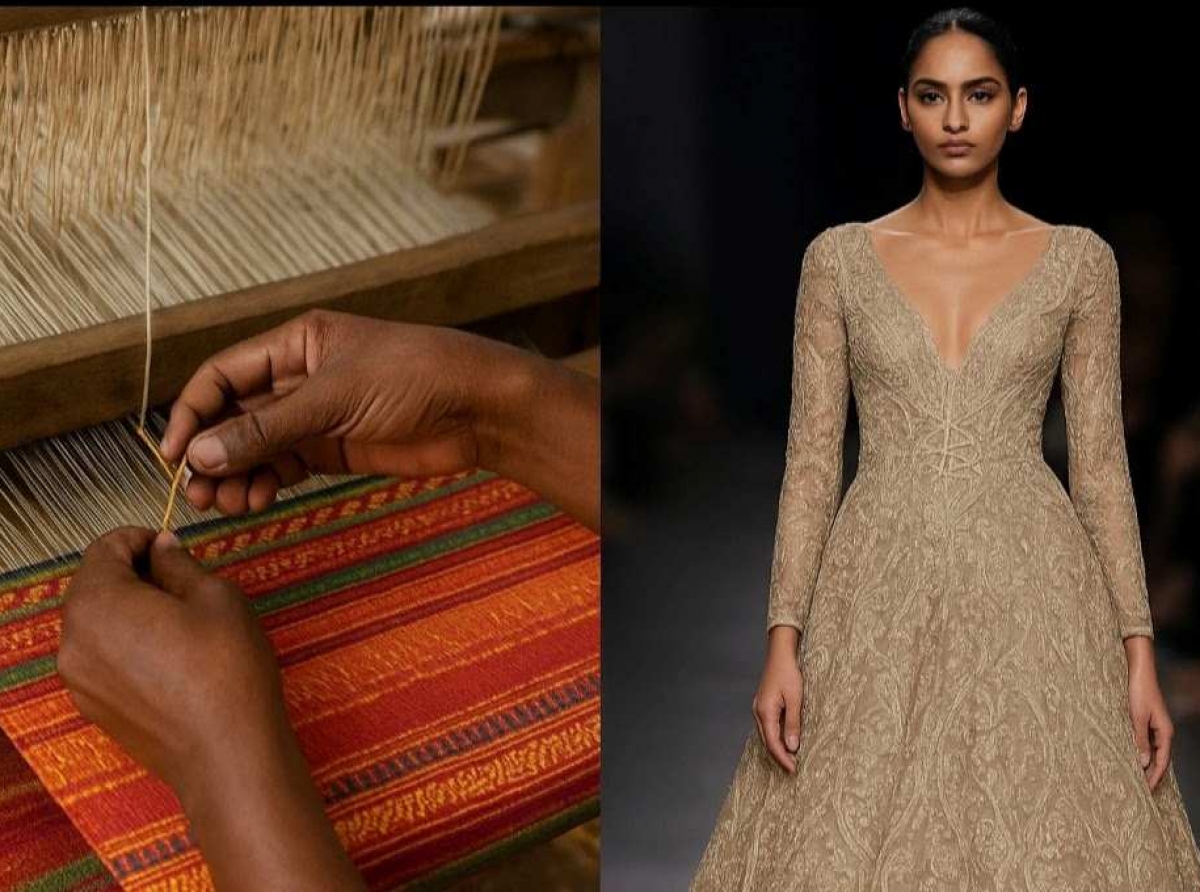
Indian traditional textiles are moving beyond their historic identity as cottage-industry products to emerge as a scalable, premium segment within modern apparel and lifestyle retail. The global market for Indian ethnic and heritage wear is valued at about $250.03 billion and projected to cross $708 billion by 2035. The opportunity is being shaped by two parallel forces: formalisation of India’s domestic ethnic-wear market and growing interest among international fashion buyers in artisan-led, lower-impact materials.
The transition is significant because heritage textiles combine cultural differentiation with growing demand for natural fibres, traceable production and handcrafted products. The challenge, however, is converting fragmented artisanal capacity into a commercially reliable supply chain.
Table: Ethnic apparel opportunity, domestic volume, global value
|
Market Indicator |
Domestic opportunity |
Global opportunity |
|
Market/Value Base |
$22.8 bn in 2026 |
$3.78 bn+ handicraft and handloom exports |
|
Growth |
$32.7 bn by 2032 |
Global handloom growth above 9% |
|
Categories |
Saris, kurtas, fusion wear |
Handprinted textiles, scarves, outerwear |
|
Consumers |
Tier II/III markets, working women |
Eco-luxury and Western D2C buyers |
|
Constraints |
Counterfeits, fragmented distribution |
Compliance, sizing and delivery consistency |
Domestic demand broadens
India’s domestic ethnic and handloom apparel market is expected to grow from $22.8 billion in 2026 to $32.7 billion by 2032, riding on consumption moving beyond weddings and festivals. Saris remain the largest category, accounting for 38 per cent of domestic demand, while kurtas, fusion separates and coordinated sets are another 24 per cent. The latter are gaining traction as ethnic aesthetics become increasingly integrated into office, casual and occasion wardrobes.
Geography is also changing the market equation. Tier II and Tier III cities account for over 55 per cent of online apparel demand, highlighting the growing importance of non-metro consumers. Digital channels now capture about 42 per cent of ethnic-wear purchases, while repeat purchase rates are approaching 90 per cent. This combination of wider geographic reach and digital discovery is helping brands move heritage products from occasion-led consumption towards everyday fashion.
Yet formalisation has not eliminated weaknesses. Authentic handlooms continue to compete against cheaper powerloom and machine-made replicas. Cotton-price volatility can squeeze artisan and brand margins, while fragmented production across thousands of weaving clusters makes consistent procurement difficult.
Exports find a new proposition
India’s global opportunity is now tied to sustainability and cultural differentiation. Handicraft and handloom exports have reached $3.78 billion annually, with handprinted textiles and artisanal scarves recording a 16.5 per cent year-on-year increase. The US is the dominant destination, accounting for 38.69 per cent of shipments, followed by the UK, UAE, Germany and France.
Table: Key markets and export growth opportunities
|
Export market |
Share of shipments |
Product opportunity |
|
US |
38.69% |
Handprinted yardage, home textiles, resort wear |
|
UK |
7.73% |
Structured separates, silk eveningwear |
|
UAE & Middle East |
7.68% |
Festive wear, embellished textiles and luxury silks |
|
Germany & France |
10.5% combined |
Organic Khadi and low-impact linens |
Western brands are also looking beyond conventional synthetic fabrics as circularity, traceability and sustainability requirements become more prominent. Materials such as Khadi, Eri silk, Chanderi and Ajrakh-dyed cotton offer a combination of natural fibres, artisanal provenance and distinctive design. For global fashion houses, these attributes can support premium positioning rather than competing purely on manufacturing cost.
Scale remains the bottleneck
The export opportunity is however constrained by the difference between artisanal production and organised retail requirements. International buyers typically demand consistent fabric specifications, colour fastness, chemical compliance and delivery within fixed 60-to-90-day wholesale cycles. Traditional processes such as open-air Ajrakh washing and weather-dependent drying can make production schedules unpredictable.
Exporters must also absorb international testing, certification, customs and compliance costs. This creates a commercial question: how can brands preserve handmade authenticity without sacrificing industrial predictability?
Emergence of hub-and-spoke model
A decentralised hub-and-spoke supply-chain model is emerging as one solution. Under this approach, brands retain design, product development and quality control at central hubs while production remains distributed across rural artisan clusters. Weaver groups can receive standardised yarn counts, pre-tested natural dyes and digital production-management systems.
The model allows brands to retain the provenance that makes heritage textiles commercially valuable while introducing the consistency demanded by modern retail. The experience of handloom clusters in Madhya Pradesh and Rajasthan highlights the potential. Organised apparel consortiums integrating standardised loom widths of 44 to 54 inches and digitised inventory systems have reduced production lead-time variance from 45 per cent to below 8 per cent.
Standardised Chanderi and Ajrakh yardages can then be converted into contemporary products such as trench coats, resort shirts and formal blazers for luxury boutiques in North America and Europe. The outcome is equally important for the artisan economy: real wage realisation has doubled while intermediate wholesale markups have been eliminated.
Fabindia shows the model
The Fabindia Group is an example of how artisan sourcing can be integrated with organised retail. Founded in 1960 by John Bissell, Fabindia has built its proposition around handloom apparel, home textiles and organic lifestyle products, working with extensive artisan and craft networks. Its retail, international and omnichannel operations demonstrate how decentralised craft production can be connected to a recognisable consumer-facing brand. The broader opportunity now lies in taking this model further from traditional product categories to contemporary global apparel.
Heritage becomes an asset
India’s heritage textile sector is entering a phase where cultural capital, sustainability and supply-chain engineering intersect. Domestic formalisation can provide the volume needed to strengthen artisan ecosystems, while exports offer access to higher-value markets. But sustained growth will depend on solving counterfeiting, standardisation, certification and delivery reliability without eroding the handmade character that differentiates Indian textiles.
The next phase, therefore, is unlikely to be about replacing craft with industrial production. It will be about building systems that allow craft to operate at commercial scale.









 Get in Touch!
