
Indian apparel breaks the occasion-wear barrier
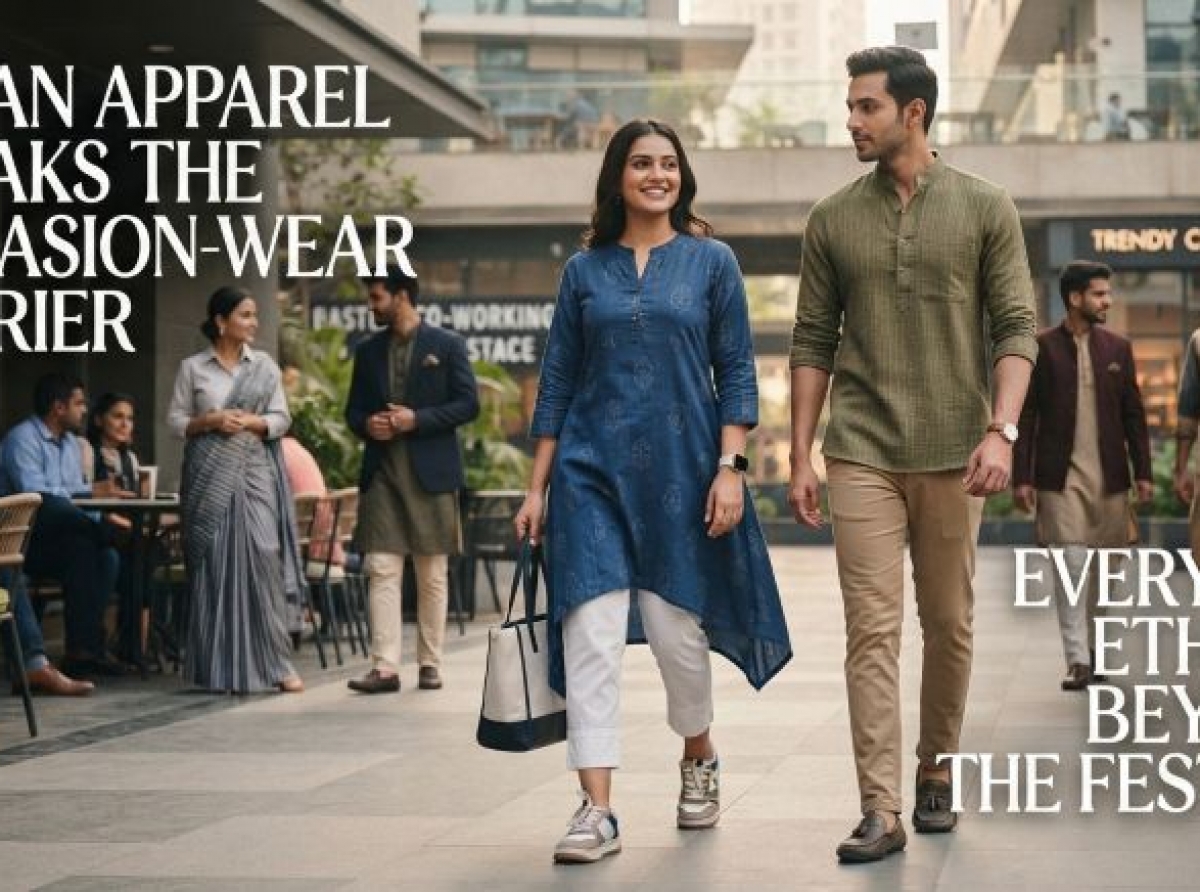
India’s apparel industry is changing how it commercialises traditional textiles. Brands are moving handloom fabrics, indigenous prints and natural dyes beyond elaborate ceremonial garments into everyday clothing designed for work, travel and leisure. The shift is expanding the market for Indian craftsmanship while making heritage more commercially relevant to younger consumers.
For decades, ethnic apparel relied heavily on weddings, festivals and religious occasions. Lehengas, heavy Anarkalis and other elaborate garments generated concentrated demand around the festive and wedding calendars, leaving retailers vulnerable to seasonal inventory cycles. Contemporary consumers, however, increasingly want clothing that combines cultural identity with comfort, versatility and ease of maintenance.
India’s ethnic apparel market is valued at almost $22.8 billion and is projected to reach $32.7 billion by 2032, growing at a compound annual rate of 6.17 per cent. Ethnic and fusion apparel also accounts for nearly 70 per cent of womenswear sales, according to the figures provided. The growth opportunity lies in translating traditional materials into contemporary formats. Chanderi, Ikat and Khadi cotton are finding applications in co-ord sets, relaxed trousers, shirt-kurtas, unstructured jackets and modern outerwear. The garment’s cultural identity comes from its weave, texture and material rather than an elaborate silhouette.
Retail gains momentum
The shift is changing the economics of apparel retail. Traditional occasion wear generates demand in concentrated bursts, while contemporary separates can sell throughout the year. A handwoven shirt or a pair of relaxed trousers can become part of a weekly wardrobe rather than a purchase reserved for a special event.
The difference extends across product design, maintenance and inventory management. Traditional ceremonial garments often require specialised care and see limited repeat use. Contemporary Indian apparel prioritises versatility, easier maintenance and repeat purchases. The supplied industry comparison indicates that modular formats can achieve inventory turns up to 50 per cent faster, although actual performance varies by brand and product category.
|
Dimension |
Traditional ethnic wear |
Contemporary Indian apparel |
|
Purchase occasion |
Weddings and festivals |
Work, travel and everyday use |
|
Inventory movement |
Seasonal peaks |
More consistent year-round demand |
|
Garment use |
Occasional, often high-maintenance |
Frequent, with easier-care options |
|
Product formats |
Lehengas, heavy Anarkalis and ceremonial saris |
Co-ords, trousers, shirt-kurtas and relaxed jackets |
|
Production |
Decentralised craft processes |
Standardised cutting and scalable assembly |
Organised retail and omnichannel commerce are helping brands reach consumers beyond major metros. In Tier-II, III markets, young shoppers are combining artisanal shirts with denim and pairing hand-blocked waistcoats with western separates. These combinations make traditional textiles relevant to everyday styling without requiring consumers to adopt complete ethnic ensembles.
The commercial logic is straightforward: increasing wear frequency can support repeat purchases, improve stock movement and reduce dependence on festive demand. The challenge is to translate that potential into measurable margin gains rather than assume that contemporary designs automatically deliver better inventory performance.
Boosting global appeal
The same design shift could help Indian apparel reach customers beyond the diaspora. Overseas demand has historically centred on wedding garments, festive clothing and traditional silhouettes purchased by consumers with direct cultural connections to India.
Global consumers may appreciate Indian craftsmanship but find elaborate embellishment, traditional draping and occasion-specific designs difficult to incorporate into daily wardrobes. Contemporary cuts offer a more accessible entry point. Khadi can be used in minimalist chore coats, while block-printed mulmul lends itself to resort shirts and lightweight dresses. Raw tussar silk can be adapted into jackets, and traditional fabrics can be developed into culottes and other modern separates.
These formats allow Indian products to compete on fabric, workmanship and design rather than cultural familiarity alone. They also align with demand for understated luxury and interest in natural materials, traceable sourcing and traditional production techniques.
However, expansion beyond Indian shores will require more than redesigning silhouettes. Brands must show consistent quality, reliable sizing, repeatable production and commercially viable pricing. Sustainability claims must also be supported by credible sourcing and production evidence. Heritage can create differentiation, but operational consistency determines whether that differentiation translates into sustained business.
The supply chain test
Scaling craft-led apparel presents a difficult production challenge. Handloom clusters often operate through decentralised networks, with variations in fabric width, tension, texture and dye absorption. These characteristics give artisanal textiles their distinctiveness but complicate automated cutting and high-volume garment assembly.
Brands must reconcile the requirements of standardised manufacturing with the natural variations of handmade fabrics. Inconsistent dimensions can increase fabric wastage, complicate pattern placement and affect production schedules.
Material engineering offers one solution. Carefully developed blends combining organic cotton or other fibres with traditional silk and linen can improve durability, wrinkle recovery and ease of care. Such interventions must preserve the fabric’s intended character rather than dilute the craftsmanship that differentiates the product.
Pricing presents another hurdle. Consumers accustomed to judging ethnic garments by visible embellishment may struggle to understand the value of a minimally designed jacket made from an expensive handloom fabric. Brands must communicate the quality of the material, the skill involved in its production and the garment’s versatility. Clear product storytelling and consistent quality are essential to justify premium pricing.
Fabindia’s reset
Fabindia is an example of how a heritage-led retailer can broaden its product proposition. Founded in 1960 as an export house for home furnishings, the New Delhi-based company has built its business around artisanal apparel, home textiles and lifestyle products.
The merchandise strategy has grown beyond traditional ethnic clothing towards casual separates and contemporary silhouettes. Through its Fabels line and wider apparel portfolio, the retailer has offered products such as boxy linen shirts, drawstring trousers and tiered dresses that combine familiar craft techniques with modern styling. The approach targets consumers seeking clothes that shift between work, leisure and social occasions. It also places traditional textiles in more frequent-use categories, potentially increasing purchase occasions beyond festivals and weddings.
Omnichannel fulfilment and digital discovery can further support this transition by connecting store-based shopping with online purchases. The broader objective is to make craft-led products accessible through the channels consumers already use, rather than relying exclusively on destination visits to traditional lifestyle stores.
The supplied corporate brief puts Fabindia’s physical store network at more than 360 locations across domestic and overseas markets and annual revenue above Rs 1,100 crore. These figures provide context for its scale, although they do not independently establish the profitability or performance of its newer apparel formats.
Scale without dilution
India’s opportunity lies in separating the value of traditional craftsmanship from the restrictions of ceremonial dressing. Contemporary silhouettes can extend the reach of handlooms, prints and indigenous materials across domestic retail and international ready-to-wear markets.
But scale will depend on getting the fundamentals right: dependable sourcing, consistent production, competitive pricing and designs that consumers repeatedly wear. Brands must also ensure that mechanisation and material blending do not erase the craftsmanship underpinning their proposition. The next phase of Indian apparel growth will not depend solely on preserving heritage in its traditional form. It will depend on making that heritage useful, wearable and commercially sustainable in the modern wardrobe.









 Get in Touch!

