
Cultural wellness opens new opportunities for India's activewear market
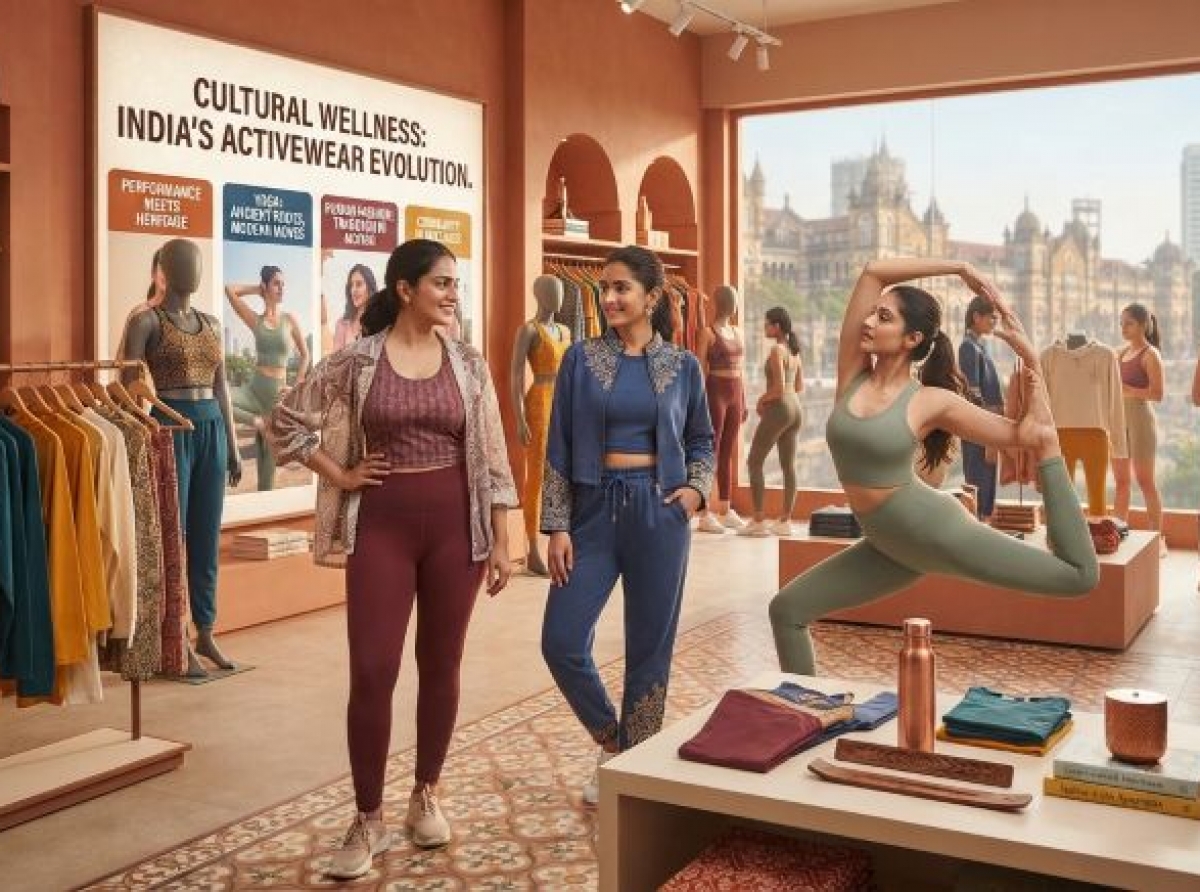
India’s activewear market is moving beyond conventional performance-led clothing, with consumers seeking products that combine fitness, comfort, cultural relevance and everyday wellness. Global trend forecaster WGSN’s strategic forecast, India Activewear Priorities 2028, reveals the next phase of market growth will be driven by demand for climate-appropriate fabrics, indigenous design influences and clothing suited to low-impact physical activities.
The domestic sportswear and activewear market is valued at approximately $11.88 billion in 2026 and is growing at over 8.7 per cent annually. The shift is an opportunity for Indian brands to differentiate their offerings through localised product development rather than compete solely on technical performance and pricing.
Wellness drives demand
Activewear merchandising has traditionally focused on compression, moisture management and high-intensity training. However, consumer preferences indicate a broader definition of physical activity. Walking accounts for 71 per cent of reported exercise participation, followed by yoga at 53 per cent, while running accounts for 36 per cent. This is creating demand for clothing suited to restorative movement, everyday mobility and home-based exercise.
The change is influencing product development. Brands are moving towards lightweight construction, flexible fits and breathable materials that support prolonged wear. Garments designed for yoga, walking and mobility exercises are gaining importance alongside conventional gym apparel.
The shift also creates opportunities in categories such as relaxed-fit joggers, studio trousers, breathable co-ord sets and versatile separates that can be worn beyond fitness environments.
Localisation creates pricing opportunities
Climate suitability and indigenous design are emerging as product differentiators. Indian consumers prefer garments that perform in high temperatures and humidity, rather than products developed primarily for temperate markets. This is prompting manufacturers to explore organic cotton, bamboo lyocell, plant-based cellulosics and bio-based polyamides as alternatives or complements to conventional synthetic fibres.
Design localisation is equally important. Non-restrictive silhouettes, dhoti-inspired joggers, comfortable waistbands and construction suited to yoga postures offer brands opportunities to develop products around Indian movement practices. According to the WGSN forecast, culturally adapted designs can command an average order value premium of around 25 per cent in Tier-I, II markets. This gives a commercial incentive for brands to move beyond standardised imported designs.
Fit remains a challenge
Despite the opportunity, sourcing and manufacturing constraints could limit the pace of growth. Certified bio-based performance yarns remain relatively expensive, increasing product development costs. Consistent availability, performance validation and price competitiveness are big challenges for brands seeking to scale sustainable material choices.
Table: Overall market and growth direction
|
Market & demographic factor |
Market details |
Projected direction (2028 horizon) |
|
Domestic Market Valuation |
$11.88 bn |
Growing at 8.7%+ CAGR |
|
Primary Exercise Participation |
Walking (71%), Yoga (53%), Running (36%) |
Rise in restorative mobility & home practice |
|
Material Sourcing Benchmark |
Heavy virgin synthetics (68% SKU mix) |
Plant cellulosics, bamboo lyocell, bio-polyamides |
|
Average Order Value (AOV) Premium |
Base activewear index |
+25% premium on culturally contoured designs |
|
Primary Sizing Benchmark |
Western metric charts |
INDIAsize empirical dimensional fit charts |
Sizing is another concern. Indian manufacturers have always relied on Western sizing charts, which do not always reflect domestic body measurements. The Ministry of Textiles' INDIAsize initiative, based on measurements collected from approximately 26,000 individuals is an empirical foundation for developing India-specific sizing standards. However, adoption across manufacturers remains uneven.
In activewear, inaccurate sizing can lead to waistband slippage, inadequate coverage and discomfort during movement. These issues also affect online conversion and increase product returns, making fit testing and standardised sizing commercially important.
D2C brands build local propositions
Several domestic direct-to-consumer brands are developing products around Indian body proportions, climate conditions and everyday movement requirements. For example, BlissClub has built its proposition around activewear designed for Indian women, with an emphasis on fit, functional details and versatile silhouettes. Its portfolio has grown from core bottom-wear into co-ord sets, studio flares, bamboo-blend products and maternity movement apparel. The brand has also reported baseline revenue of over Rs 70 crore.
Similarly, Kica Active is targeting everyday movement through low-impact activewear, soft-ribbed tops and breathable joggers suited to yoga and other fitness activities. Bird Eye has focused on lightweight fabric blends designed for tropical weather, positioning comfort and breathability as alternatives to heavier conventional gymwear. Terractive is developing clothing that bridges workwear and activewear, with commuter trousers and studio bottoms designed for use across work, walking and everyday mobility.
These brands reflect a broader shift in category positioning. Rather than treating activewear exclusively as exercise clothing, they are building collections around daily movement and extended wear.
Retail moves beyond product sales
The changing consumer proposition is also influencing retail formats. Activewear brands are exploring studio-inspired stores and community-led engagement to strengthen customer relationships. Walking sessions, yoga activities, breathwork and wellness workshops are becoming potential extensions of the retail experience. Partnerships with fitness communities and wellness platforms can help brands generate repeat engagement beyond conventional product launches and discount-led promotions.
For retailers, the opportunity lies in making wellness a distinct category rather than limiting it to gym clothing and performance apparel.
Market outlook
WGSN’s forecast points to a shift in the basis of competition in Indian activewear. Product performance will remain important, but climate suitability, fit, material sourcing and cultural relevance are likely to play a larger role in purchase decisions. Brands that can combine these elements with consistent manufacturing quality and competitive pricing will be better positioned to capture the next phase of category growth.






 Get in Touch!

