
Thrifting goes mainstream as India’s second-hand fashion market gains ground
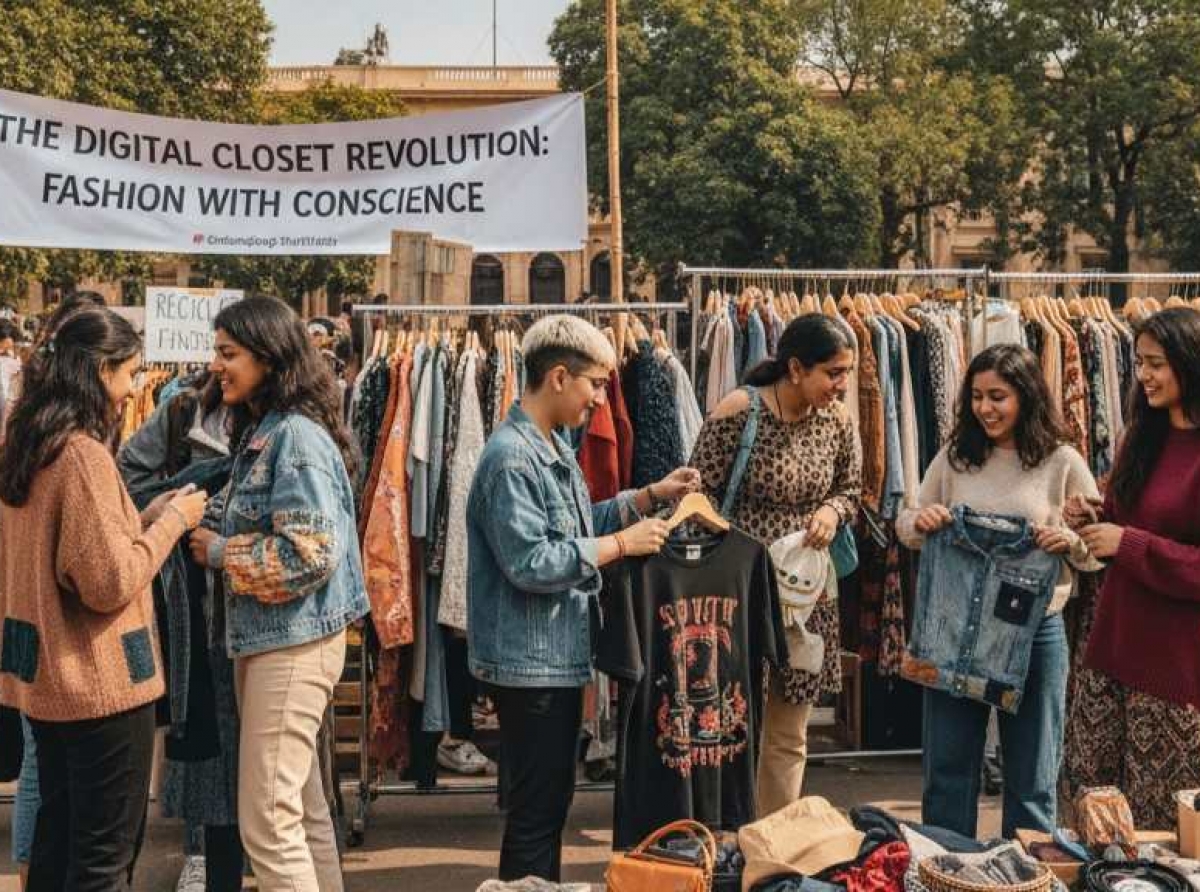
India’s second-hand apparel market is moving from the margins of fashion retail to a mainstream consumption channel, with a sharp rise in online searches signalling growing consumer intent around thrift, resale and circular fashion. Google search data shows queries for ‘thrifting’ reached an all-time high over the past 12 months. Searches for ‘how to thrift?’ grew 850 per cent, while ‘thrift store near me’ rose 600 per cent, pointing to a shift from passive curiosity to active purchase discovery.
The trend is no longer restricted to India’s largest fashion markets. Delhi-NCR, Mumbai, Bengaluru, Hyderabad, Chennai and Kolkata continue to account for significant search activity, but cities such as Kochi, Dehradun, Guwahati and Jaipur are emerging as new centres of interest.
The increase in basic discovery searches is equally significant. Queries for ‘what is thrift store’ rose 1,000 per cent, while vernacular searches such as ‘thrift meaning in Hindi’ indicate that second-hand fashion is attracting first-time consumers beyond its traditional urban, digitally savvy audience.
|
Indicator |
Growth/Value |
Industry context |
|
Google Search: "Circular Fashion" |
+2,500% YoY |
Highest surging apparel query category |
|
Google Search: "How to Thrift" |
+850% YoY |
Broadening consumer education & onboarding |
|
Google Search: "Thrift Store Near Me" |
+600% YoY |
High-intent footfall and localized online discovery |
|
India Second-Hand Apparel Market Valuation |
$3.00 bn (growing to $9.11 bn by 2032) |
Expanding at a projected 13.04% CAGR |
|
Wardrobe Share (Global Recommerce Benchmark) |
28% of Closet Volume |
Resale expanding 2x–3x faster than firsthand fashion |
Search becomes a retail signal
The increase is being reinforced by economics. According to Credence Research, India’s second-hand apparel market is projected to grow from $3 billion in 2023 to $9.11 billion by 2032, at 13.04 per cent CAGR. Globally, Boston Consulting Group estimates the second-hand fashion market is growing at two to three times the rate of first-hand fashion. Affordability and value remain major purchase drivers, but recommerce is also becoming a customer-acquisition route for fashion brands, particularly among younger consumers.
Streetwear drives demand
Product-level search behaviour suggests that consumers are not simply looking for cheaper clothing. They are seeking distinctive products unavailable through conventional mass-market retail. Jackets lead thrift-related apparel searches, followed by casual tops, footwear and denim. Y2K-inspired streetwear including jorts, track pants and oversized baggy jeans is generating strong inventory velocity.
Premium vintage is also gaining traction. Searches and enquiries around vintage sports jerseys, heritage saris, retro graphic T-shirts and pre-owned leather accessories point to an emerging market for archive fashion. This changes the proposition for retailers. Pre-owned fashion is no longer positioned solely as discounted merchandise. Vintage and limited-run products offer scarcity, differentiation and personal styling opportunities that standardised fast-fashion assortments cannot easily replicate.
Sustainability meets value
The growth of recommerce is being driven by two parallel forces: consumer value consciousness and the fashion industry’s growing circularity agenda. Searches for ‘circular fashion’ jumped 2,500 per cent over the year, while sustainable fashion increased 120 per cent. The numbers suggest that sustainability is moving beyond corporate messaging and entering the consumer discovery funnel.
BCG research also indicates that around 80 per cent of second-hand fashion buyers are motivated by affordability and value. Recommerce can therefore appeal simultaneously to price-sensitive shoppers and consumers seeking more sustainable consumption.
For Gen Z, the proposition extends further. Secondary platforms can act as discovery channels for emerging labels, allowing shoppers to experiment with brands, styles and categories at lower entry prices. India’s market offers considerable headroom. With the domestic second-hand apparel market projected to triple by 2032, resale could increasingly become part of the mainstream fashion-retail architecture rather than an adjunct to it.
Technology tackles the supply gap
Demand, however, is only one side of the equation. India’s recommerce supply chain remains fragmented, with inventory spread across Instagram sellers, flea markets, independent thrift stores and informal sorting networks.
Scaling the category requires greater consistency in authentication, condition grading, sizing, cataloguing and reverse logistics. Technology is beginning to address these constraints through image recognition, visual search, automated grading, predictive sizing and digital authentication.
For organised retailers, this infrastructure could make formal buy-back, repair and resale programmes easier to integrate with existing stores and e-commerce platforms. Instead of building separate businesses, brands can potentially use their existing customer and retail networks to create closed-loop fashion ecosystems.
Brands eye resale as acquisition
The emerging opportunity is reflected in the rise of specialised technology platforms. Founded in 2021, Relove offers circular-commerce infrastructure that enables fashion and designer brands to integrate peer-to-peer resale into their existing e-commerce storefronts. The platform has worked with domestic labels across organised apparel and premium fashion, with plans to expand its branded resale infrastructure into Southeast Asia following double-digit GMV growth.
For established retailers, the strategic attraction is increasingly clear. Resale can extend the life of products, create additional consumer touchpoints and potentially bring younger shoppers into a brand ecosystem.
India’s thrift boom therefore is more than a change in consumer taste. The sharp rise in search intent suggests the emergence of a new retail behaviour one where affordability, individuality and circularity converge. As technology standardises fragmented supply and organised retailers begin experimenting with resale, second-hand fashion could evolve from a niche social-commerce phenomenon into a meaningful component of India’s next retail cycle.









 Get in Touch!
