
Wedding, romance, gifting redefine India’s premium men’s innerwear market
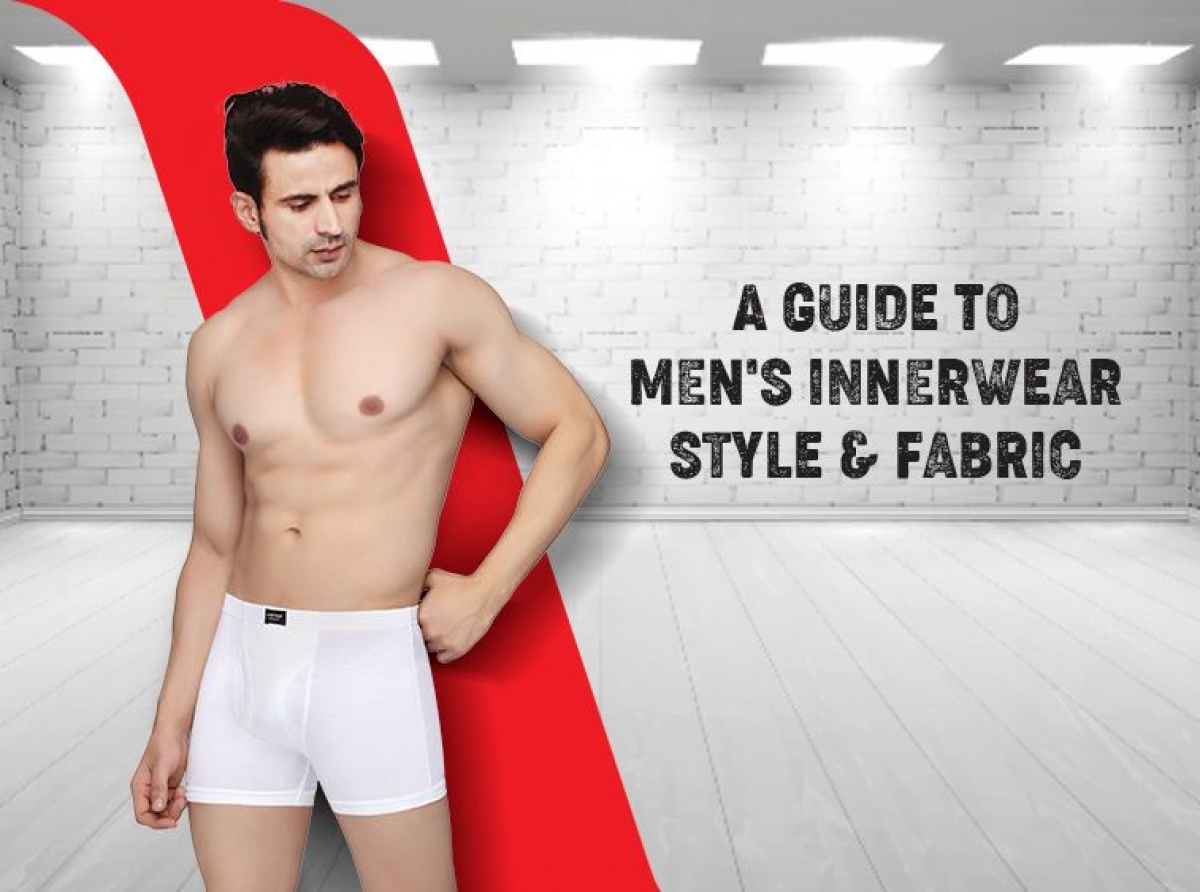
India’s men’s innerwear market is moving beyond its traditional identity as a functional, price-led category, with premium brands positioning intimate wear around self-expression, romance and occasion-based consumption. For decades, men’s underwear was largely marketed through the language of durability, comfort and value, with cotton multi-packs dominating mass retail. A combination of rising disposable incomes, digital-first shopping and changing attitudes towards relationships and personal grooming is now creating space for a more expressive proposition.
The shift is particularly visible in urban markets, where consumers are becoming more willing to pay for fabric innovation, design and specialised products rather than treating innerwear purely as a replenishment purchase.
Growing premium pool
As per IMARC Group data, India’s overall innerwear market was valued at around $10.9 billion in 2025 and is projected to reach $19.8 billion by 2034, at 6.49 per cent CAGR. The male segment alone was estimated at $10.7 billion in 2025 and is projected to reach $16.5 billion by 2034. Within this market, premium male innerwear is emerging as a distinct value-creation opportunity.
Table: Indian innerwear market, the men’s share
|
Market Segment |
Valuation in 2025 |
Projected 2034 |
Projected CAGR (2026-34) |
Growth drivers |
|
Total Indian Innerwear Market |
$10.9 bn |
$19.8 bn |
6.49% |
Urbanization, retail formalization, online channels |
|
Total Male Innerwear Segment |
$10.7 bn |
$16.5 bn |
4.75% |
Fabric upgrades, brand awareness, athleisure overlap |
|
Premium Male Innerwear Segment |
$815.8 mn |
$1.40 bn |
6.01% |
MicroModal adoption, occasion wear, digital D2C access |
The premium male segment is expected to grow from $815.8 million in 2025 to $1.40 billion by 2034, growing at 6.01 per cent annually. Although still a relatively small portion of the overall category, its faster growth reflects a willingness among sections of consumers to spend more on products that combine comfort, aesthetics and emotional relevance.
Intimacy enters the pitch
The evolution is also changing how brands communicate with male consumers. Traditional innerwear advertising has relied heavily on male Bollywood and cricket celebrities and themes such as confidence, athleticism and masculinity. Newer labels are experimenting with a different vocabulary centred on intimacy and relationships.
Indian luxury intimatewear label Undress, founded by Shradha Chaturvedi, is one example. Its positioning: ‘Intimatewear for men. Designed by her. For him’ places women at the centre of the brand's communication for a category dominated by male-centric imagery for long. The proposition is based on an apparent gap in the market: while women's lingerie has long been associated with mood, occasion and personal expression, men's underwear has largely remained functional. Chaturvedi says, when they studied the category, the whitespace was striking. According to her, improvements in comfort and fabrication have not been matched by an equivalent conversation around intimacy and occasion.
Actor and fashion personality Urvashi Rautela fronts the brand's nationwide campaign, reinforcing its attempt to build a shared conversation between partners rather than presenting intimatewear exclusively through a male lens.
Wedding are the best opportunity
For premium innerwear brands, India's wedding economy offers a potential growth engine. Wedding consumption is traditionally concentrated on visible categories such as bridal and groom couture, jewellery, accessories and beauty. However, brands are increasingly looking at the less visible parts of the wedding journey, including honeymoon travel, gifting and post-ceremony wardrobes. This creates an opportunity to convert innerwear from a routine purchase into an occasion-specific product.
Undress has structured its initial proposition around weddings, honeymoons, dating and gifting. Its 13-style debut collection combines Parisian-inspired design with Indonesian manufacturing and uses a 90 per cent MicroModal and 10 per cent Spandex. Priced between Rs 799 and Rs 1,399, the collection is positioned between mass-market innerwear and significantly more expensive international designer offerings. The strategy also reflects a broader retail trend: premiumisation does not necessarily require luxury-level pricing. Instead, brands can create perceived value through fabrication, design, packaging, storytelling and targeted occasions.
D2C tests the market
Digital-first brands have already shown that Indian men will pay a premium for differentiated innerwear. XYXX recorded operating revenue of Rs 187 crore in FY25, while Damensch reported Rs 118 crore. Both have helped establish modal-based fabrics, improved construction and comfort-led design as viable premium propositions.
However, the category remains challenging. Customer acquisition costs can be high for D2C businesses, while profits can take time as brands invest heavily in marketing, inventory and fulfilment. The next stage of growth will also require premium labels to move beyond India's major metros. Tier-II and Tier-III markets offer more volumes, but consumers there remain more price-sensitive and traditional distribution networks continue to play a strong role.
Retail gets more personal
Digital commerce nevertheless gives intimatewear an advantage that conventional innerwear retail often lacks: privacy. Discreet fulfilment and brand-owned websites can reduce the social discomfort associated with buying unconventional or premium intimate products. This can encourage consumers to experiment with new designs and fabrics without the constraints of a traditional retail counter.
For the broader sector, the opportunity is therefore less about replacing mass innerwear and more about creating new consumption occasions around it. As men's grooming, fashion and lifestyle spending meet, the garment beneath the outfit is becoming part of the consumer's broader identity. The groom's drawer, once dominated by functional multi-packs, could consequently become another premium retail battleground driven by weddings, relationships, gifting and the growing willingness to spend on products designed for private moments.









 Get in Touch!
